
What Is Shopify? How It Works, Costs and Limits Explained
What is Shopify and how does it work? A clear intro to the e-commerce platform: features, costs, benefits, limits and who Shopify is right for.

Richard Roth
SEO & GEO Strategist
October 25, 2026
11 min read

Shopify is a hosted e-commerce platform that lets you build and run an online store without worrying about servers, updates, or security. You pay a monthly fee, and Shopify delivers the entire technology behind it. Think of it like a rental apartment with a caretaker: you furnish it and sell, and the provider handles the rest.
That is exactly what makes Shopify so popular. Instead of pouring months into technology and maintenance, you can focus on what matters: products, customers, and revenue. In this article, we explain in plain terms what Shopify is, how it works, what it costs, and who it is right for.
- • Definition: Shopify is a hosted SaaS platform. You rent the complete online store including technology, hosting, and security.
- • How it works: Themes for the design, an app store with thousands of extensions, and a built-in checkout with Shopify Payments.
- • Multichannel: Sell not only in your store but also via Instagram, TikTok, Amazon, and in person, all from one system.
- • Who it's for: From your first sale to enterprise operations via Shopify Plus. Shopify grows with your business.
- • Costs: Plans start at around 36 euros per month, with app costs and transaction fees added depending on your setup.
What Is Shopify?
Shopify is a hosted SaaS e-commerce platform, meaning it is an online store builder and a sales platform in one. SaaS stands for Software as a Service. That means you do not buy software and install it on your own server. Instead, you use it as a service over the internet for a monthly fee.
In practice, Shopify provides everything an online store needs. Product catalog, shopping cart, checkout, payment processing, customer management, and the technical infrastructure behind it. You do not have to deal with server maintenance, software updates, or security patches. Shopify handles all of that for you in the background.
Shopify was founded in 2006 in Canada. Today, millions of merchants in over 175 countries use the platform, from small one-person shops to international corporations. This range is no accident. It is the result of a system that grows with your requirements. Our shop system market share analysis puts Shopify as the second-largest system by shop count and the fastest-growing among the established platforms.
SaaS sounds technical, but it is simple: you rent the software instead of buying it. The advantage is that updates, security, and server performance are included in the price, so you never run an outdated version.
The “rented apartment with a caretaker” picture is the right one, but people usually judge Shopify on the base fee and stop there. What actually shapes the bill is apps and transaction fees, plus how cleanly the store is set up. If you are weighing Shopify against a self-hosted system, compare the total running cost including your own maintenance time, not just the monthly plan.
How Does Shopify Work?
Shopify works on a building-block principle: you combine a ready-made design with your products and unlock additional features through apps when you need them. The entire technical foundation runs hosted in the cloud, and you access it only through your browser.
To give you a clear picture, here are the most important building blocks in detail.
Themes: Your Store’s Design
A theme is your store’s design template, comparable to an off-the-rack suit that you tailor to your brand. Shopify offers free and paid themes. You change colors, fonts, logo, and layout in the visual editor with a few clicks, with no coding knowledge required. If you want to go deeper, you can adjust the theme code through the template language Liquid.
The App Store: Features to Add On
In the Shopify App Store, you find over 16,000 apps to extend your store. An app is an add-on feature that you install with a few clicks, much like an app on your smartphone. These can be review tools, email marketing, accounting connections, or upselling features. This keeps the core store lean, and you only add what you actually need.
Checkout and Payments
The checkout is the payment area where customers complete their order. Shopify provides an optimized, mobile-friendly checkout that has been tested on millions of orders. Through Shopify Payments, its in-house payment service, you accept credit cards, PayPal, Apple Pay, and local payment methods directly, without connecting an external provider. Alternatively, you can integrate third parties like Klarna or Mollie.
Sales Channels and Shopify Markets
Shopify is not just an online store but a multichannel platform. Multichannel means you sell across several channels at once and manage everything centrally. You connect your store with Instagram, TikTok, Facebook, Amazon, or a physical point-of-sale (POS) system, and all orders and inventory come together in one backend.
For international sales, there is Shopify Markets. With it, you control currencies, languages, local prices, and taxes for different countries from a single store, instead of building a separate one for each market.
Start with what you need, not with everything that is possible. A clean theme, a reliable payment provider, and two or three core apps are plenty to launch. You can always expand later.
What Does Shopify Cost?
Shopify’s standard plans start at 36 euros per month (Basic, billed monthly), though the exact prices vary depending on the plan, billing period, and add-on features. There are several tiers, from the entry package to Advanced and the enterprise offering Shopify Plus.
Important to know: the monthly base fee is only part of the bill. On top of it, you may have:
- App costs: Many apps are paid and billed monthly. They add up quickly if you use several.
- Transaction fees: Payments incur fees. If you use Shopify Payments, they are lower than with external providers.
- Theme and design: Premium themes cost a one-time fee, and custom adjustments cost extra.
Because total costs depend heavily on your setup, a closer look pays off. You find a full breakdown of all plans, app costs, and hidden fees in our guide How Much Does Shopify Cost?. If you want to calculate the costs for a specific project, our calculator helps.
Who Is Shopify Right For?
Shopify is suitable for nearly any store size, from your first sale to international enterprise operations. This scalability is one of the platform’s greatest strengths. You do not have to switch systems when your business grows.
Specifically, Shopify fits these profiles especially well:
- Beginners and founders: Anyone who wants to start quickly and without technical knowledge is in the right place with Shopify. The first store is often up and running in an afternoon.
- Growing brands: D2C brands (direct to consumer, meaning selling straight to end customers) benefit from the large app ecosystem and the marketing features.
- Multichannel merchants: Anyone selling via social media, marketplaces, and in person manages everything centrally.
- Enterprise: Large merchants with high volume rely on Shopify Plus, the enterprise variant with advanced features, more automation, and dedicated support.
Shopify is less ideal for projects that need very specific, deeply customized processes and therefore demand full control over the code and database. In such cases, a self-hosted solution can make more sense. For the vast majority of online stores, however, the benefits of the hosted platform outweigh the limits.
Already running a store on another system and thinking about switching? The move is often easier than expected. In our migration hub, you learn how a clean switch to Shopify works, without losing rankings or data.
What Are the Pros and Cons of Shopify?
Shopify has clear strengths but also clear limits. We show you both sides so you can make an informed decision.
The biggest advantages lie in the simplicity and the freedom from maintenance. Because Shopify is hosted, you never have to worry about servers, updates, or security. That saves time, stress, and ongoing costs for technology. On top of that come a huge app ecosystem, a proven checkout, and high reliability even during traffic spikes, such as during a promotion.
On the other hand, there are limits. Because you work on a platform, you have less control over the code than with a self-hosted solution. Some very specific requirements cannot be implemented, or only through workarounds. And app costs can add up if you retrofit many features.
| Pros | Cons |
|---|---|
| Hosted, no self-maintenance needed | Less code control than self-hosted |
| Quick start, even without technical knowledge | App costs add up over time |
| Huge app ecosystem for extensions | Platform limits for special requirements |
| Optimized, secure checkout | Transaction fees for external payment methods |
| Scales from launch to enterprise (Shopify Plus) | Dependency on a single vendor |
| Multichannel and international built in | Custom design sometimes needs Liquid skills |
The bottom line: for most merchants, the advantages weigh more. Giving up code control is a fair price for eliminating maintenance, security risks, and technical effort.
Shopify or Alternatives: What Fits?
Shopify is a strong choice but not the only one. Which system fits depends on your requirements, your budget, and your technical ambition. A short, neutral overview helps with the classification.
The most important alternatives at a glance:
- WooCommerce: The WordPress extension suits content-driven stores and offers full control, but it requires self-maintenance.
- Shopware: A strong option for the German market and complex B2B requirements, with more development effort.
- Magento: Very flexible for large, custom setups, but resource-intensive to operate and maintain.
- Builders like Wix or Jimdo: Simple, but usually too limited for serious e-commerce growth.
The difference lies mainly in the balance between control and effort. Self-hosted systems give you more freedom but full responsibility for technology and security. Shopify takes that burden off your shoulders, in exchange for slightly less depth on very specific requirements.
If you want to compare the systems directly, our comparison of online shop systems offers a detailed classification with all strengths and weaknesses.
Conclusion
Shopify is a hosted e-commerce platform that takes the entire technology off your hands so you can focus on selling. You get themes for the design, an app store for extensions, a proven checkout, and multichannel features, all from one system. The platform scales from your first sale to enterprise operations.
You give up some code control, and app costs can grow. But for the vast majority of stores, the advantages clearly outweigh that. If you are thinking about a switch to Shopify, our migration hub helps with the next step, clean, predictable, and without ranking loss.
 Frequently Asked Questions
What is Shopify in simple terms?
How does Shopify work?
What does Shopify cost?
Who is Shopify right for?
What are the disadvantages of Shopify?
You might also like
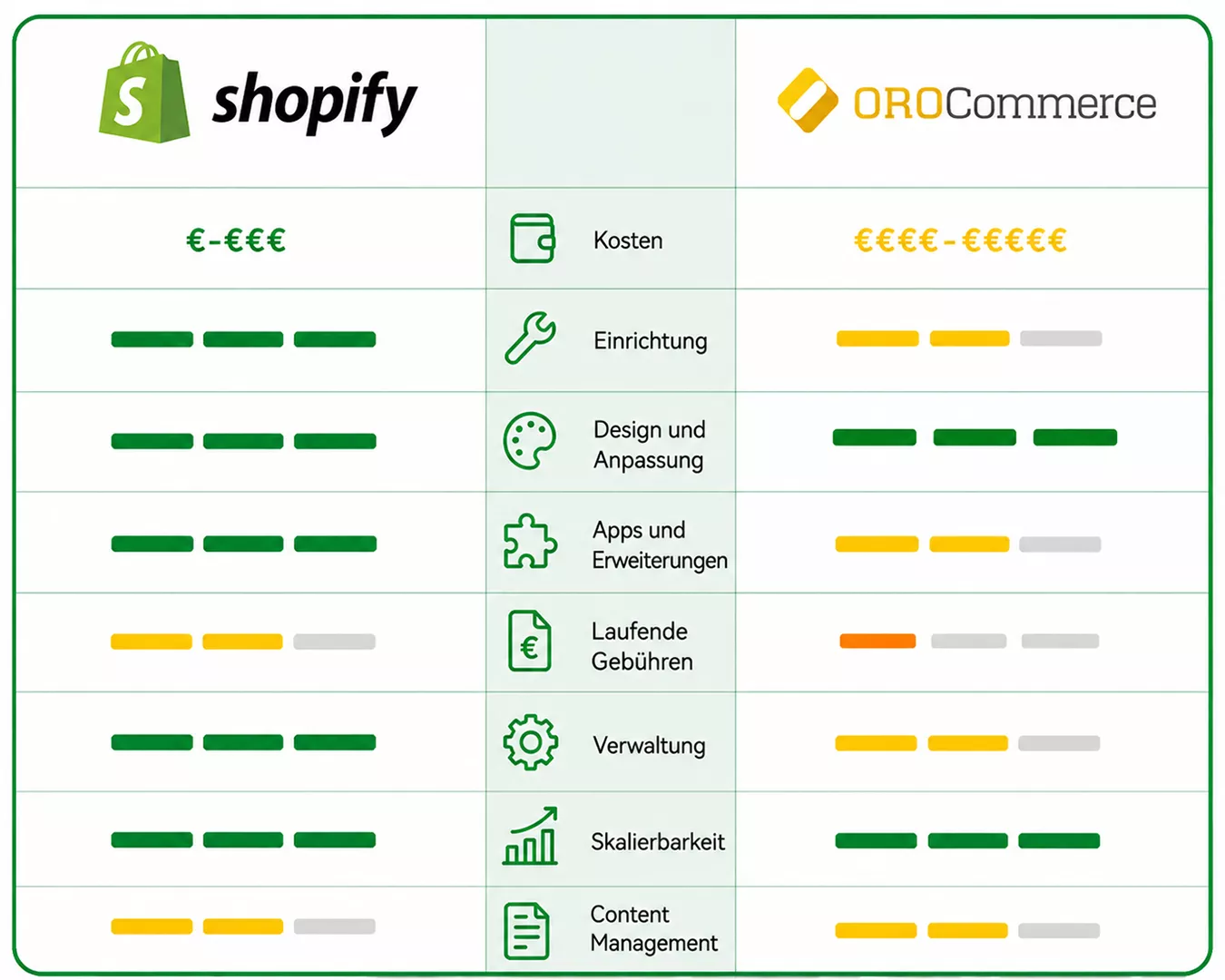
OroCommerce or Shopify? A Direct Comparison 2026
OroCommerce vs Shopify in a direct comparison: B2B features, costs, maintenance, scaling and SEO. Find out which system fits your store.
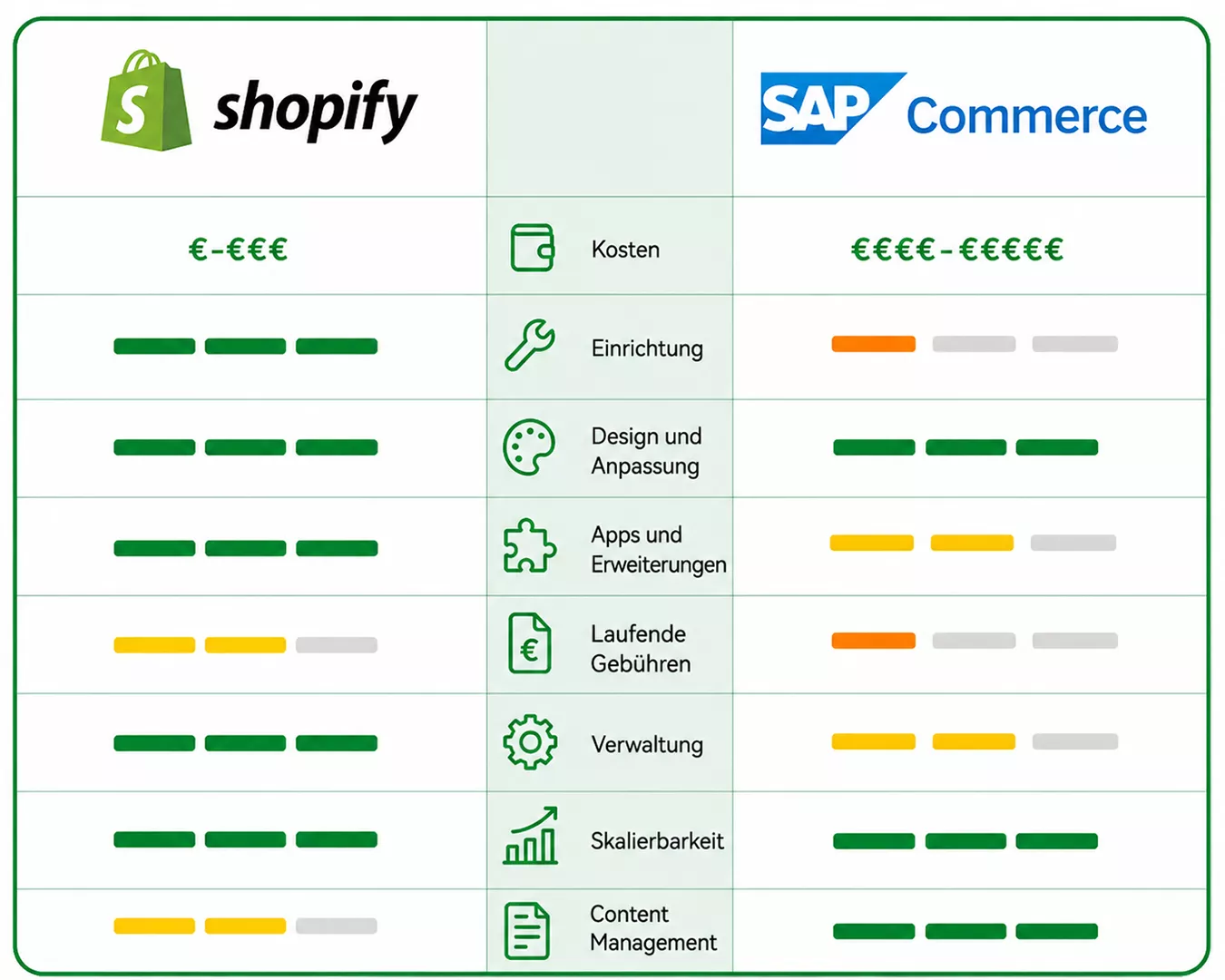
SAP Commerce or Shopify? A Direct Comparison 2026
SAP Commerce vs Shopify in a direct comparison: costs, B2B, SAP integration, complexity and SEO. Find out which system fits your store.
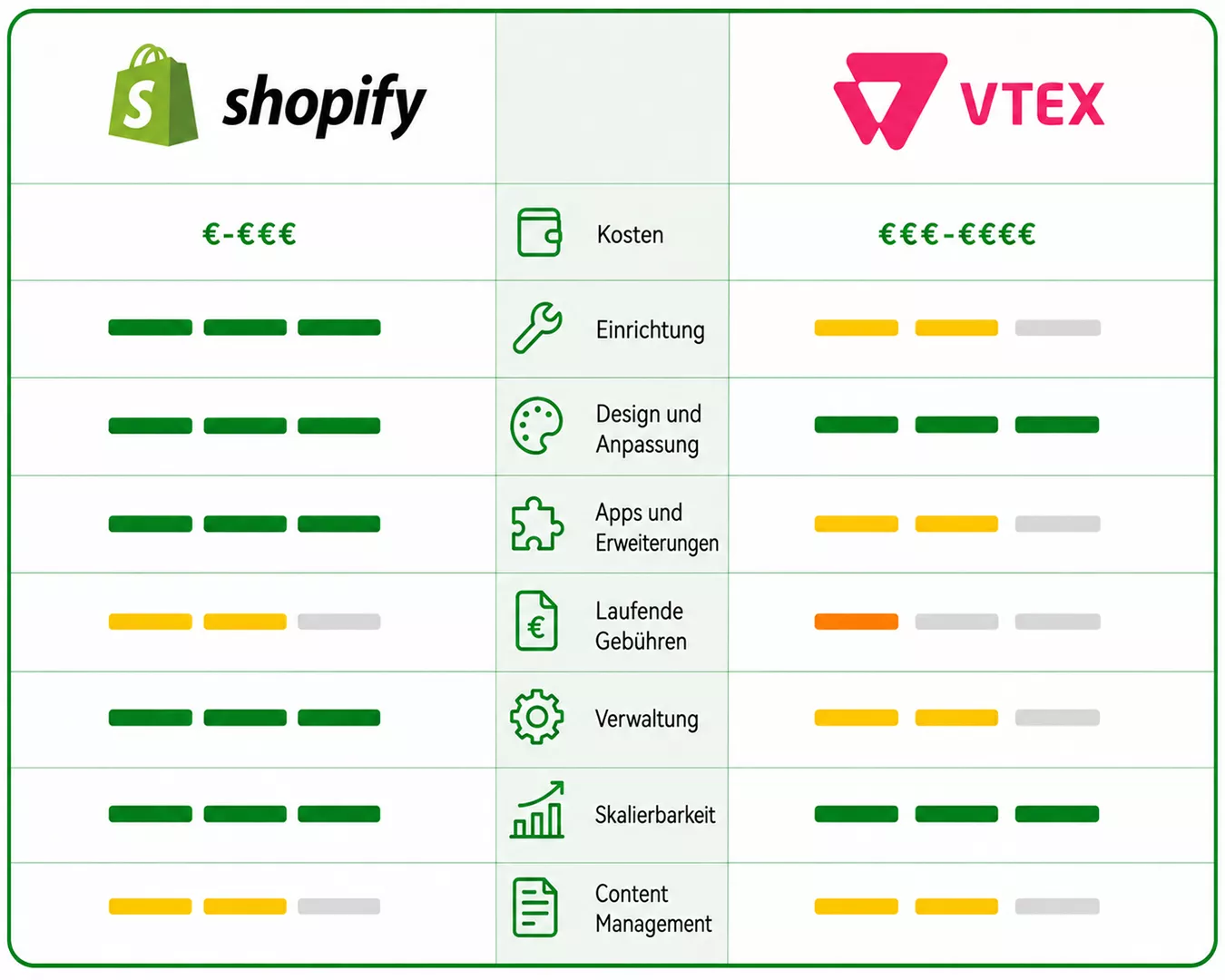
VTEX or Shopify? A Direct Comparison 2026
VTEX vs Shopify in a direct comparison: costs, B2B, marketplace, internationalization and SEO. Find out which system fits your store.