What Is an E-Commerce Stack? Structure and Components
An e-commerce stack is the technical foundation of your online store. Learn which components you need, how to choose them, and what really matters in 2026.

Richard Roth
SEO & GEO Strategist
July 26, 2026
15 min read

An e-commerce stack is the technical foundation of your online store. It encompasses all the software, platforms, programming languages, and frameworks that operate, manage, and scale your shop. Think of it as your business’s operating system: each layer has a clear function, and only through their interaction does a functioning, growth-capable operation emerge.
The stack is divided into three main areas. The front end is everything your customers see and touch: user interface, product pages, checkout flow. The back end is the invisible machinery: order processing, database logic, system integrations. The supporting tools cover marketing, customer service, analytics, payment processing, and inventory management.
- • Definition An e-commerce stack encompasses all software, platforms, and tools that operate and scale your online store.
- • Core Components Platform, payment processing, marketing, customer service, analytics, and inventory management form the foundation of every stack.
- • MACH Architecture Microservices, API-first, cloud-native, and headless enable faster deployment cycles and greater flexibility.
- • Selection Criteria Scalability, measurability, data sovereignty, and integration depth are the four most important decision factors.
- • Modernization Outdated systems slow growth and should be strategically replaced with modern, modular solutions.
Table of Contents
- Which Technical and Operational Building Blocks Make Up Your Stack
- Why a Well-Organized Tech Stack Is Essential Today
- How to Build Your Own E-Commerce Stack Step by Step
- Which Criteria Really Matter When Selecting E-Commerce Technologies
- Current Trends and Expert Insights on E-Commerce Stacks in the German Market
- What Successful E-Commerce Stacks Look Like in Germany
- FAQ
Which Technical and Operational Building Blocks Make Up Your Stack
Modern e-commerce stacks consist of several operational layers. Each layer has a defined function, and the quality of the connections between them determines the overall system performance.
Core Platform and Checkout: Shopify, Magento, WooCommerce, and Shopware are the four most widely used platforms in the German market. They manage product catalogs, order processes, and customer data. According to Shopify, over 2 million stores worldwide use the platform, making it the first choice for rapid growth and a broad app ecosystem. Magento and Shopware offer deeper customization options for complex B2B scenarios or wholesale requirements. WooCommerce is the WordPress-native solution and works well for content-driven stores.
Frontend Technologies: HTML, CSS, and JavaScript frameworks like React or Vue.js build the user interface. Headless setups completely separate frontend and backend, enabling faster load times and better SEO control. Concretely, this means your development team can optimize the interface independently of the backend without touching the entire platform.
Marketing and Sales Systems: Klaviyo or ActiveCampaign for email automation, Google Ads and Meta Ads for paid traffic, tools like Awin for affiliate marketing. These systems ensure your customers receive the right message at the right time.
Customer Retention and Support: Zendesk, Gorgias, or Freshdesk as helpdesk solutions. For returns and exchanges, specialized tools like Returnbird come into play. A good support stack measurably reduces response time and increases customer satisfaction.
Analytics and Reporting: Google Analytics 4, Matomo (for GDPR-compliant analytics), and Looker Studio for custom dashboards. Without clean data, you cannot make informed decisions.
Payment Processing: Stripe, PayPal, Klarna, and Mollie cover the common payment methods in the German market. PCI-DSS compliance is not optional but mandatory to securely process card data and avoid legal risks.
Inventory Management and ERP: Systems like Xentral, JTL-Wawi, or SAP Business One synchronize inventory, orders, and accounting in real time. This prevents overselling and manual data maintenance.
| Area | Typical Tools |
|---|---|
| Platform | Shopify, Magento, WooCommerce, Shopware |
| Payment Processing | Stripe, Klarna, PayPal, Mollie |
| Email Marketing | Klaviyo, ActiveCampaign, Mailchimp |
| Customer Service | Zendesk, Gorgias, Freshdesk |
| Analytics | Google Analytics 4, Matomo, Looker Studio |
| Inventory Management / ERP | Xentral, JTL-Wawi, SAP Business One |
| PIM / Product Data | Akeneo, Pimcore |
| SEO and Content | Yoast SEO, Screaming Frog, Ahrefs |
The table shows that a complete stack typically consists of several different systems. What matters is not the number but how well they communicate with each other.

The table lists a lot of tools, but the part that actually breaks in practice is the connections between them, not any single box. A shop where the ERP does not talk cleanly to the platform will hurt more than a shop missing a fancy analytics tool. When I plan a stack, I map the data flows between components first and treat the individual tools as replaceable, because a lean stack that syncs reliably beats a rich one held together by manual exports.
Why a Well-Organized Tech Stack Is Essential Today
A well-organized stack delivers concrete operational advantages that directly impact revenue and efficiency.
Automation: Order confirmations, inventory updates, and return processes run without manual intervention. This saves time and reduces errors. Your team can focus on strategic tasks instead of processing routine work.
Better Data Integration: When platform, CRM, and analytics tools use the same data foundation, no contradictions arise in reports and decisions. You see in real time which campaigns work and where bottlenecks exist.
Scalability: A modularly built stack grows with the company. Individual components can be replaced without rebuilding the entire system. This is especially important when you grow from 100 to 10,000 orders per month.
Security and Data Sovereignty: Internal data sovereignty makes companies more flexible in the face of technological disruptions. Those who control their own data are less dependent on individual vendors. This protects against price increases and platform risks.
Customer Experience: Fast load times, smooth checkout, and personalized communication do not happen by accident. They are the result of a well-coordinated stack. Every second of load time costs conversions, every friction in checkout costs revenue.
The opposite is also true. Outdated or poorly integrated systems create bottlenecks: order data must be transferred manually, inventory does not match the store, and marketing campaigns run into the void because customer data is stuck in different silos. Such problems cost time, money, and customer satisfaction.
The MACH principles (Microservices, API-first, Cloud-native, Headless) address exactly these weaknesses. They enable faster deployment cycles and more efficient operational processes because each component can be updated or replaced independently. For German mid-sized businesses, this is no longer a future topic in 2026 but an active trend in the German market.

How to Build Your Own E-Commerce Stack Step by Step
Building a tech stack is not a one-time project but an ongoing process. An e-commerce stack is a living architecture that must grow with the company. Those who underestimate this build a system today that becomes a bottleneck tomorrow.
Step 1: Define Requirements
Before you select a single tool, clarify what your store really needs. How many orders do you process daily? Which sales channels do you use? Do you need B2B functions or is a simple B2C checkout sufficient? These questions determine which platform and which tools are even viable.
Step 2: Choose Core Platform
The platform is the foundation. Shopify is suitable for rapid growth and low development costs. Magento and Shopware offer more flexibility for complex requirements but require more development resources. WooCommerce is the right choice if you already build on WordPress and content plays a central role.
Step 3: Integrate Core Systems
Payment processing, inventory management, and email marketing are the three systems you need from the start. Everything else comes later. Start with the minimum that fulfills your current goals and expand strategically.
Step 4: Composable Commerce as an Architectural Principle
Instead of a monolithic system that can do everything in one, composable commerce relies on specialized, interchangeable modules. However, the transition from a monolith to a modular setup requires process adjustments and careful data migration. This is not just a technical problem but also an organizational change.
Step 5: Avoid Over-Engineering
More tools do not automatically mean more performance. Each additional component increases complexity and maintenance effort. Start with the minimum that fulfills your current goals and expand strategically.
Step 6: Test Integrations
Before you go live, check whether all systems communicate correctly with each other. A payment provider that does not transfer order data to the ERP is not progress. Test in a staging environment before confronting customers with it.
Which Criteria Really Matter When Selecting E-Commerce Technologies
Selecting the right technologies is a strategic decision, not a technical exercise. Store2x always considers tech stack selection in the context of growth, company size, and market requirements, from simple starter solutions to hybrid setups for larger operations.
Scalability: Can the tool grow with you? A system that reaches its limits at 500 daily orders is not a good investment. Check whether the platform still performs at 5,000 or 50,000 orders.
Measurability: Selection and integration of the tech stack must be simple, measurable, and scalable. If you cannot measure whether a tool contributes, it is hard to justify. Define clear KPIs for each system.
Usability: Tools that your team does not understand or use bring no value. Simple usability is not a luxury but a prerequisite for actual use. Complex systems require training and cause errors.
Integration Depth: How well does the tool connect with your platform and other systems? Open APIs are a clear plus here. Systems without API access create data silos and manual work.
Cost-Benefit Ratio: Monthly license costs add up quickly. Always calculate the total effort including setup, training, and ongoing maintenance. A cheap tool that consumes a lot of development time is ultimately more expensive than a pricier solution that works immediately.
Data Sovereignty: Where is your data? Can you export it and migrate it to another system if needed? Vendors that lock in data create dependencies. Look for export functions and open data formats.
Development Resources: Some tools require developers for setup and operation. If you do not have an internal development team, choose solutions with low technical effort. No-code and low-code tools are often the better choice here.
Future-Proofing: Does the tool support modern architectures like API-first or headless? A tool that offers no interfaces today will become an obstacle tomorrow. Check the vendor’s roadmap and community activity.
Test new tools first in a staging environment before moving them to live operation. This way you identify integration problems before they affect customers.
Current Trends and Expert Insights on E-Commerce Stacks in the German Market
In 2026, three developments shape the German e-commerce market more than anything else: MACH architectures, composable commerce, and the rise of AI-powered commerce processes.
MACH and Composable Commerce
MACH stands for Microservices, API-first, Cloud-native, and Headless. Each of these principles addresses a concrete weakness of monolithic systems. Microservices: individual functions can be developed and deployed independently. API-first: all components can communicate with each other. Cloud-native: architectures scale automatically with traffic. Headless: frontend and backend are separated, giving development teams more freedom in designing the user interface.
Composable commerce goes a step further. It combines MACH principles with the idea of assembling the stack from specialized best-of-breed solutions instead of relying on one platform that does everything mediocrely. For many mid-sized German companies, hybrid solutions are the most practical path: proven platforms like Shopify combined with specialized APIs.
Important here: MACH architectures require experienced developers and close coordination between platform and frontend teams. Without these prerequisites, technical and operational risks quickly outweigh the advantage of flexibility.
Unified Commerce
Connecting the physical point-of-sale (POS) system, online store, marketplace, and customer account in a shared data layer is the goal of unified commerce. Those who achieve this can deploy products faster, synchronize inventory in real time, and address customers consistently across channels. This is not a trend for large corporations alone. Mid-sized retailers in Germany are increasingly adopting this architecture.
AI and Agentic Commerce
AI compatibility is becoming a basic requirement for modern stacks. Agentic commerce describes scenarios where AI agents independently make purchasing decisions or trigger processes, such as automatic reorders or personalized product recommendations in real time. For this to work, data must be structured, current, and machine-readable. A stack that keeps data in silos or offers no clean APIs will become invisible in this environment.
Ensure your stack outputs structured product data in JSON-LD format. This not only improves SEO visibility but also makes your store accessible to AI agents and voice search.
More on the topic of social commerce and new sales channels shows how technology trends affect the entire commerce strategy.
What Successful E-Commerce Stacks Look Like in Germany
Abstract principles help only to a limited extent. Therefore, it is worth looking at typical stack configurations that actually work in the German market.
High-Growth D2C Store
A brand manufacturer selling directly to end customers with several thousand orders per month typically relies on Shopify as the core platform, Klaviyo for email automation, Gorgias for customer support, and Matomo for GDPR-compliant web analytics. Inventory management runs through Xentral, which is connected to Shopify via API. This stack is manageable, well integrated, and can be operated without a large development team.
Mid-Sized B2B Merchant
More complex requirements, such as individual price lists, customer groups, and high order volumes, require more depth. Shopware or Magento take on the platform role here, supplemented by an ERP system like SAP Business One or Microsoft Dynamics. The frontend can be built headless to achieve maximum performance. The migration from Magento to Shopify is a sensible step for many operations when the maintenance costs of the Magento system burden the budget.
Fast-Growing Startup
Those who want to start and test quickly do not need a complex stack. Shopify with a few well-chosen apps covers most requirements. Payment processing via Stripe, email marketing via Mailchimp, analytics via Google Analytics 4. Simple, measurable, expandable. The decisive advantage: if the business model changes, the stack can be adapted without rebuilding everything.
Migration as Stack Modernization
Many German stores still operate systems that were introduced ten or more years ago. WooCommerce installations with dozens of poorly maintained plugins, outdated Shopware versions, or Magento 1 instances that have not received support for years. An SEO-safe migration to a modern platform is not a technical gimmick in these cases but an operational necessity. Store2x has carried out numerous such migrations, often with rapid go-live and without data loss.
The Store2x case studies show concrete examples of how stores modernized their tech stack while securing rankings and revenue.
If you want to rethink your existing stack or switch to a modern platform, Store2x is the right partner. With over 45 completed migration projects, a fixed-price promise, and more than 40 five-star reviews, Store2x accompanies stores from planning to go-live. Request migration now and make your stack future-proof.
 Frequently Asked Questions
 What belongs to an e-commerce stack?
How do I choose the right platform for my stack?
What is the difference between MACH and composable commerce?
How many tools do I need in my stack?
When should I modernize my stack?
How long does it take to build a new e-commerce stack?
You might also like
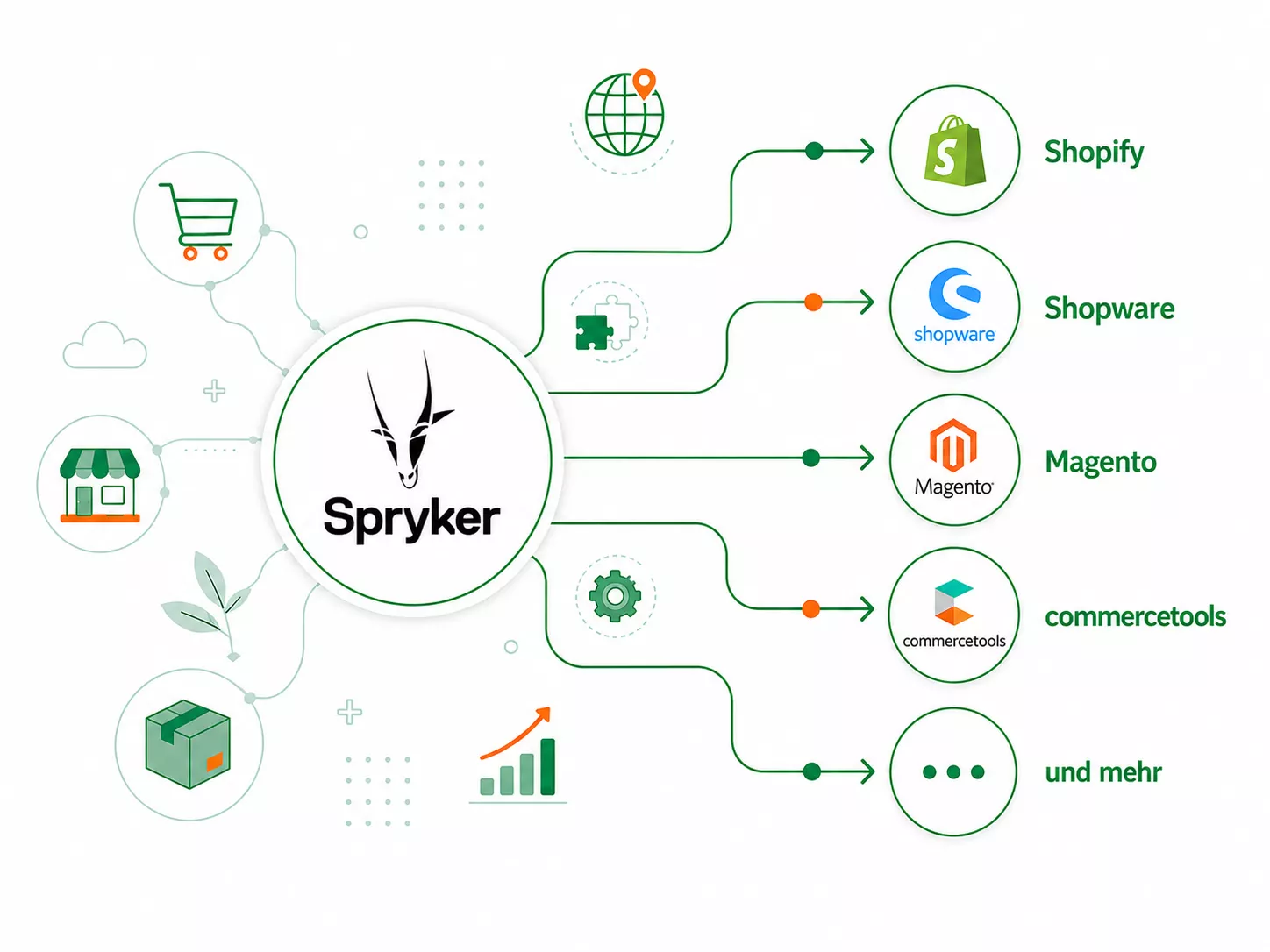
Spryker Alternatives 2026: Headless Power, Compactly Delivered
Spryker alternatives compared: enterprise and headless commerce without a large dev team or a long implementation. With a clear recommendation.
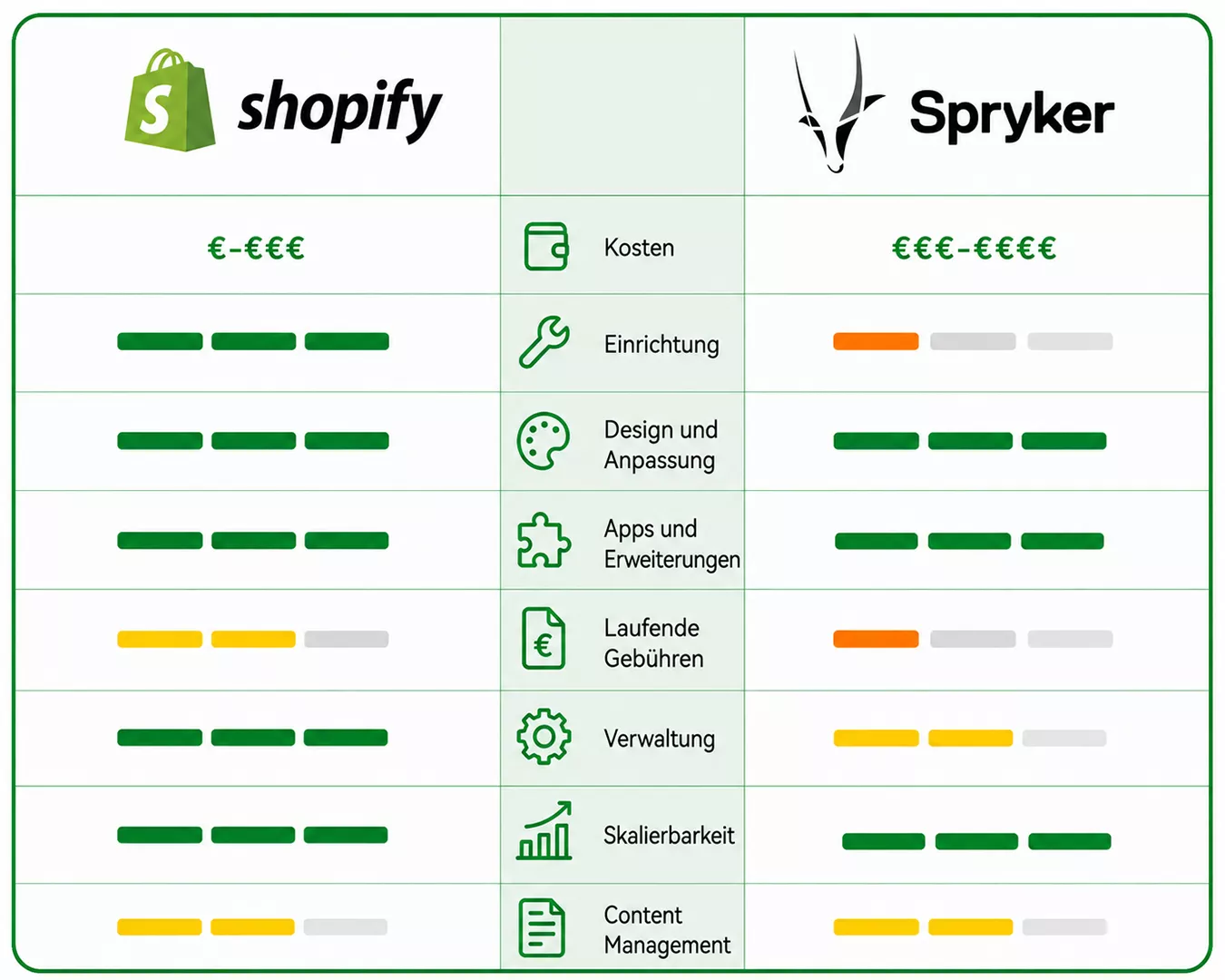
Spryker vs Shopify: Direct Comparison 2026
Spryker vs Shopify in direct comparison. Costs, complexity, composable commerce and time to market. Find out which platform fits you.
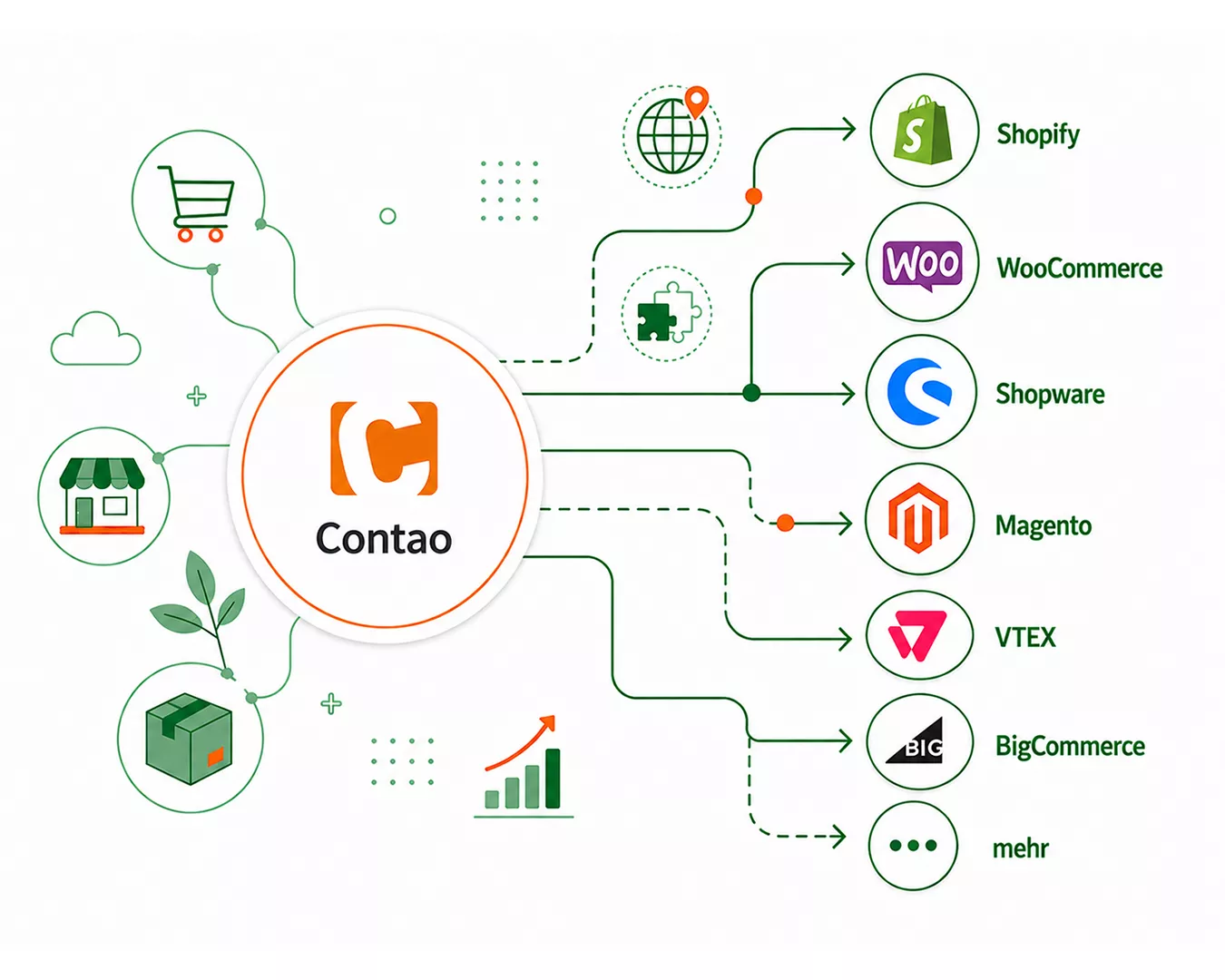
Contao Alternatives 2026: The Best Shop Systems Compared
Contao alternatives compared: full commerce depth instead of an Isotope add-on, a strong checkout and no server maintenance. Which system suits which shop.