
commercetools Alternatives 2026: Composable Freedom, Leanly Delivered
commercetools alternatives compared: composable commerce without your own dev team, a built-in storefront and much lower running costs. With a recommendation.

Richard Roth
SEO & GEO Strategist
September 28, 2026
9 min read
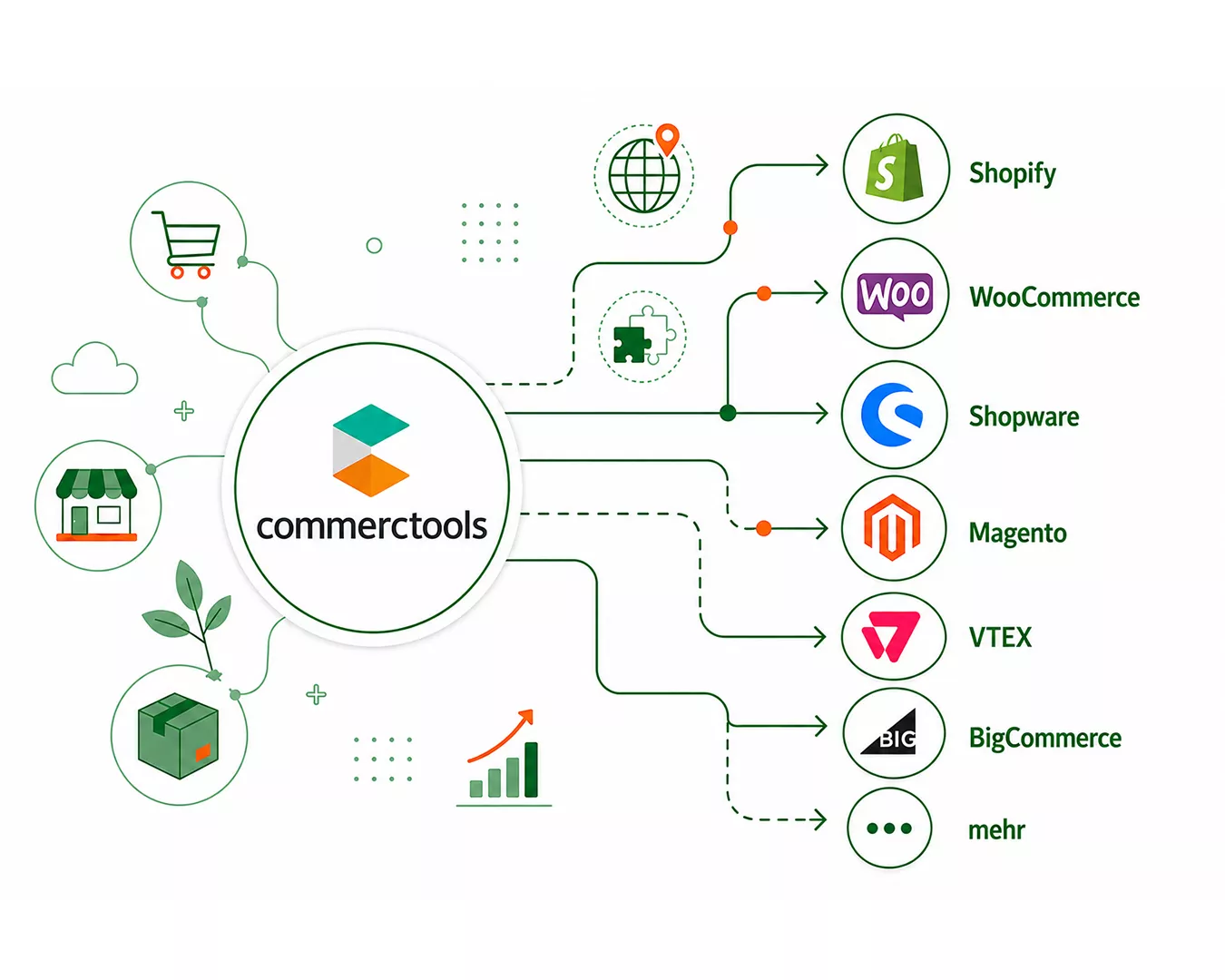
commercetools is a headless, API-first composable commerce platform for the enterprise segment. It can freely assemble almost anything, but it demands high license and operating costs, a large developer team and a completely self-built frontend. For many projects, the question eventually comes up whether that effort is really necessary.
Let’s look at the best commercetools alternatives: what they can do, where their limits are and which system really pays off for whom.
- • Shopify (Plus): delivers comparable performance for most projects at a fraction of the license and operating cost, real headless included via Hydrogen and the Storefront API, plus a storefront that ships with it.
- • commercetools only really pays off if you need highly complex composable commerce with your own dev team. Otherwise it's oversized.
- • Adobe Commerce (Magento): the classic enterprise alternative for very complex, custom B2B with maximum depth.
- • Shopware: worth a look if you want to stay self-hosted in DACH B2B but run leaner and with a ready-made storefront.
- • The strength of commercetools stays the maximum flexibility for very large, tailor-made composable setups. The question is whether your project really uses that freedom.
Why do merchants look for a commercetools alternative?
Because the total bill rarely adds up. commercetools ties up high license costs, a demanding cloud infrastructure and a permanent developer team that builds and operates the completely custom frontend. These are the four triggers that drive merchants away from the platform:
- Very high license and operating costs: the total cost sits well above that of a standard platform.
- A large dev team is mandatory: nothing runs without experienced developers, every change goes through code.
- Long implementation: composable projects often stretch over many months, which burdens budget and time to market.
- No storefront included: you have to develop and permanently maintain the entire frontend yourself.
Composable commerce, freely assembling individual services, is powerful, but only makes sense if you actually use that freedom and have the team for it. If your business runs at its core like a very good, scalable shop, you get that faster and cheaper elsewhere.

On the projects I take off commercetools, the pattern is almost always the same: a composable stack built for flexibility that the business never actually exercised. Before we plan a move I inventory which services are genuinely custom versus which just reimplement standard shop behavior, because that list decides whether Shopify Plus with Hydrogen covers you or whether you truly still need composable. The migration itself is mostly about the integrations, so we map every API endpoint and rebuild them one by one on a staging store before anything goes live.
What should a good commercetools alternative be able to do?
It has to cover the strengths of commercetools without inheriting its cost and complexity. Six criteria hang on that, and they also structure the comparisons that follow:
- Total cost: license, hosting, operation and dev team combined, not just the sticker price.
- Scalability: does the system grow with high traffic, many products and international requirements?
- Usability: how much works without developers, straight from the backend?
- Maintenance effort: who carries updates, security and infrastructure?
- Content and SEO: clean fundamentals for visibility, without you having to build them yourself.
- Time to market: how fast are you live and how fast do you ship changes?
The best commercetools alternatives at a glance
| Platform | Type | From price/month | Hosting | Best for |
|---|---|---|---|---|
| Shopify (Plus) | SaaS (hosted) | from 36 € | included | Enterprise performance and headless without a permanent dev team |
| Shopware | Self-hosted | CE free | your own | Self-hosted DACH B2B, leaner than composable |
| Adobe Commerce (Magento) | Self-hosted / PaaS | high license | your own | Very large, custom enterprise B2B |
| Spryker | Composable, self-hosted | high license | your own | Highly custom composable commerce and marketplaces |
| BigCommerce | SaaS (hosted) | from ~35 € | included | A hosted platform with a headless option |
Briefly placed: Shopify (Plus) covers the performance most actually need, without license and operation. Shopware and Adobe Commerce are the self-hosted options with full code control. Spryker stays in the composable camp when you need real composable freedom. BigCommerce is the hosted middle ground with an open API.
The alternatives in detail
Shopify (Plus): enterprise performance without enterprise effort
Shopify scales up to Shopify Plus and delivers exactly the performance most commercetools projects actually need, just without the operation.
- Cut enterprise cost. License and a large dev team fall away without relevant performance loss.
- Shorten time to market. Changes go live without long developer sprints, and a storefront ships with it.
- Headless when needed. You get real headless with Hydrogen and the Storefront API, Shopify’s own headless stack, without permanently tying up a whole team.
For most projects sitting on commercetools today or evaluating it, that’s the more pragmatic path to comparable performance.
Do the honest test: list the features you really need commercetools for. If little comes to mind that a scalable standard platform with a headless option wouldn’t also cover, composable is probably oversized for your project.
Shopware: self-hosted and leaner
Shopware is a self-hosted shop system with a strong DACH B2B focus. You get full code control and a ready-made storefront, much leaner to operate than a pure composable platform. Sensible if you want to stay self-hosted but don’t want to carry the full composable load. The price: updates, hosting and maintenance are on you.
Adobe Commerce (Magento): maximum depth for enterprise B2B
Adobe Commerce is the classic enterprise pick for very large, highly custom B2B with your own team. For complex B2B requirements with a lot of custom development, Shopify isn’t automatically the better choice, this is where Magento plays out its depth. The trade-off remains: high license, self-hosted, high maintenance effort.
Spryker: composable when you really need it
Spryker is the most direct composable alternative to commercetools. If you run real, highly custom composable commerce, large marketplaces or multiple business models under one roof, Spryker is on eye level. Shopify doesn’t automatically win here, and we say so plainly. Just like with commercetools, though, you need a large dev team for it and carry the high total costs.
BigCommerce: hosted with a headless option
BigCommerce is a hosted SaaS with an open API and a headless option, a compromise between a standard platform and flexibility, without the commercetools operation. Solid if you want to stay hosted but still work headless.
commercetools vs. Shopify: the direct comparison
| Criterion | commercetools | Shopify (Plus) |
|---|---|---|
| Model | Composable, API-first, headless | SaaS, fully hosted, headless optional |
| Cost | high license plus infra and team | from 36 €/month, Plus for enterprise |
| Storefront | fully self-built | included, headless optional |
| Operation | dedicated dev team needed | handled by Shopify |
| Time to market | long implementation | fast, changes without sprints |
| Best for | highly complex composable commerce | enterprise performance without an operating load |
More detail in commercetools vs. Shopify and the shop system comparison.
Which alternative fits whom?
| Your profile / requirement | Recommendation |
|---|---|
| Enterprise performance and headless, but no permanent dev team | Shopify (Plus) |
| Self-hosted DACH B2B, leaner than composable, with a ready-made storefront | Shopware |
| Very large, custom enterprise B2B with maximum depth | Adobe Commerce |
| Real, highly custom composable commerce and marketplaces | Spryker |
| Stay hosted but still work headless | BigCommerce |
For most projects the road leads to Shopify (Plus), because you get the performance without carrying the cost and complexity of composable.
What does switching from commercetools cost?
It depends heavily on your individual architecture, since a composable setup is rarely standard. So there’s no fixed flat price.
The shop system calculator helps with the cost estimate, and as an agency specialized in Shopify migration we also handle demanding moves so that data, interfaces and rankings carry over cleanly. How it works for commercetools is on our commercetools to Shopify migration page.
Conclusion: which commercetools alternative fits you?
For most projects, Shopify (Plus) is the best alternative to commercetools. You get enterprise performance including a headless option and a storefront that ships with it, without having to carry license, infrastructure and a permanent developer team. If you need real, highly complex composable commerce, Spryker or commercetools stay sensible, and for very large, custom B2B, Adobe Commerce is the enterprise pick.
Not sure whether composable is really necessary for your project? We look at your setup and migrate at a fixed price, including interfaces and rankings. Get your free analysis.
 Frequently Asked Questions
What is the best commercetools alternative?
Do I get real headless with Shopify like with commercetools?
When is commercetools worth it over a standard platform?
What does switching from commercetools to Shopify cost?
You might also like
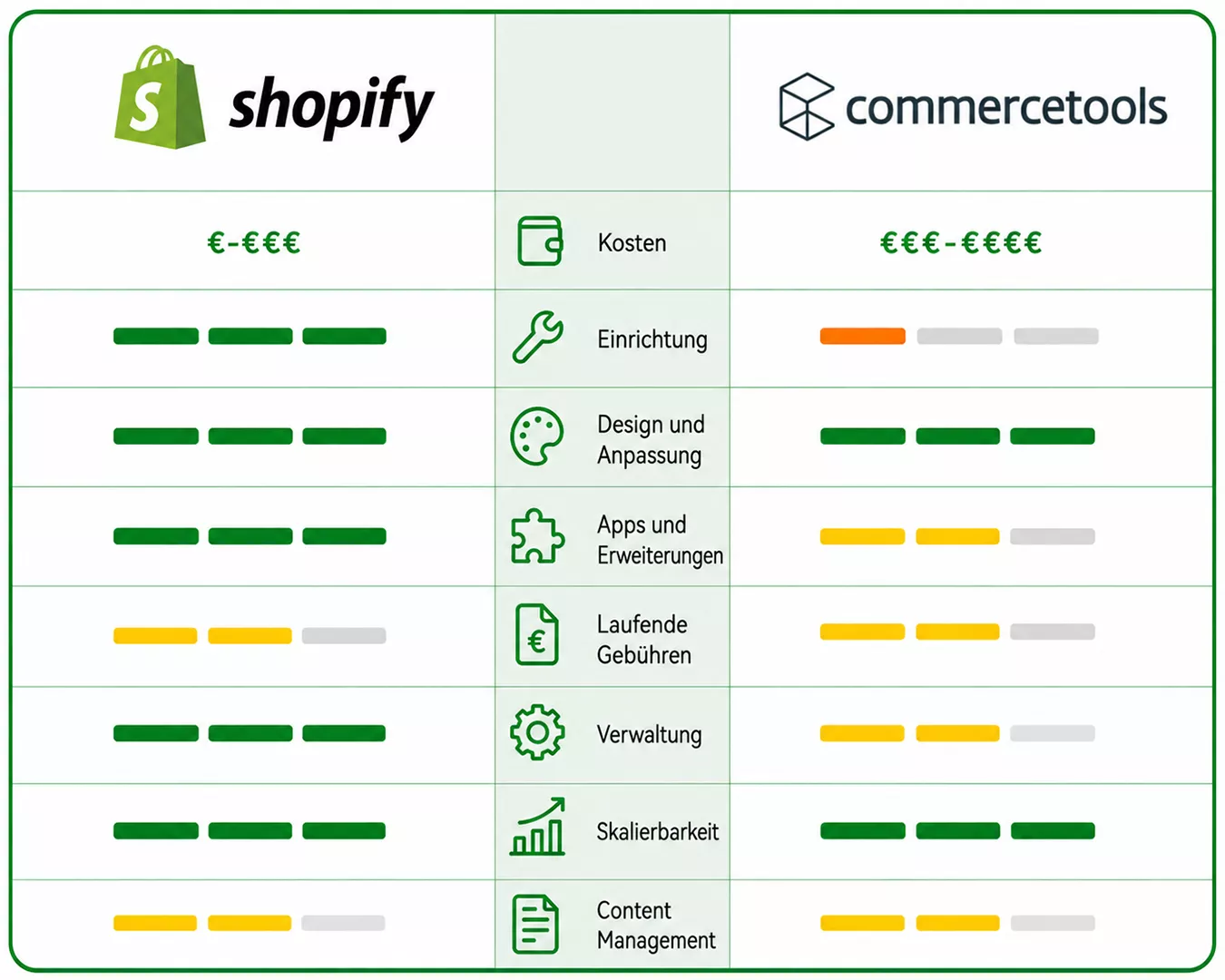
commercetools or Shopify? A Direct Comparison 2026
commercetools vs Shopify in a direct comparison: costs, composable/headless, time to market, B2B and SEO. Find out which system fits your store.
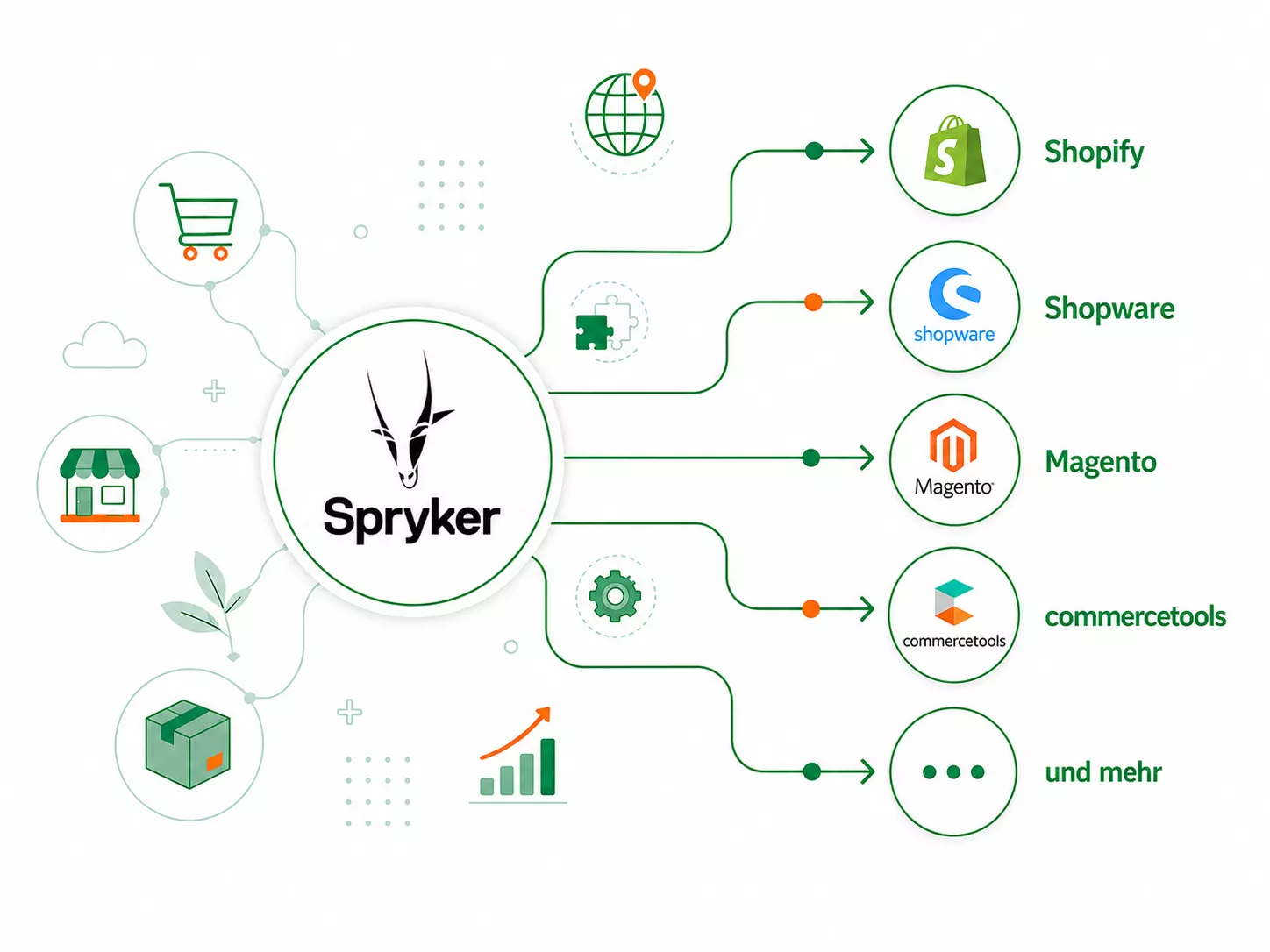
Spryker Alternatives 2026: Headless Power, Compactly Delivered
Spryker alternatives compared: enterprise and headless commerce without a large dev team or a long implementation. With a clear recommendation.
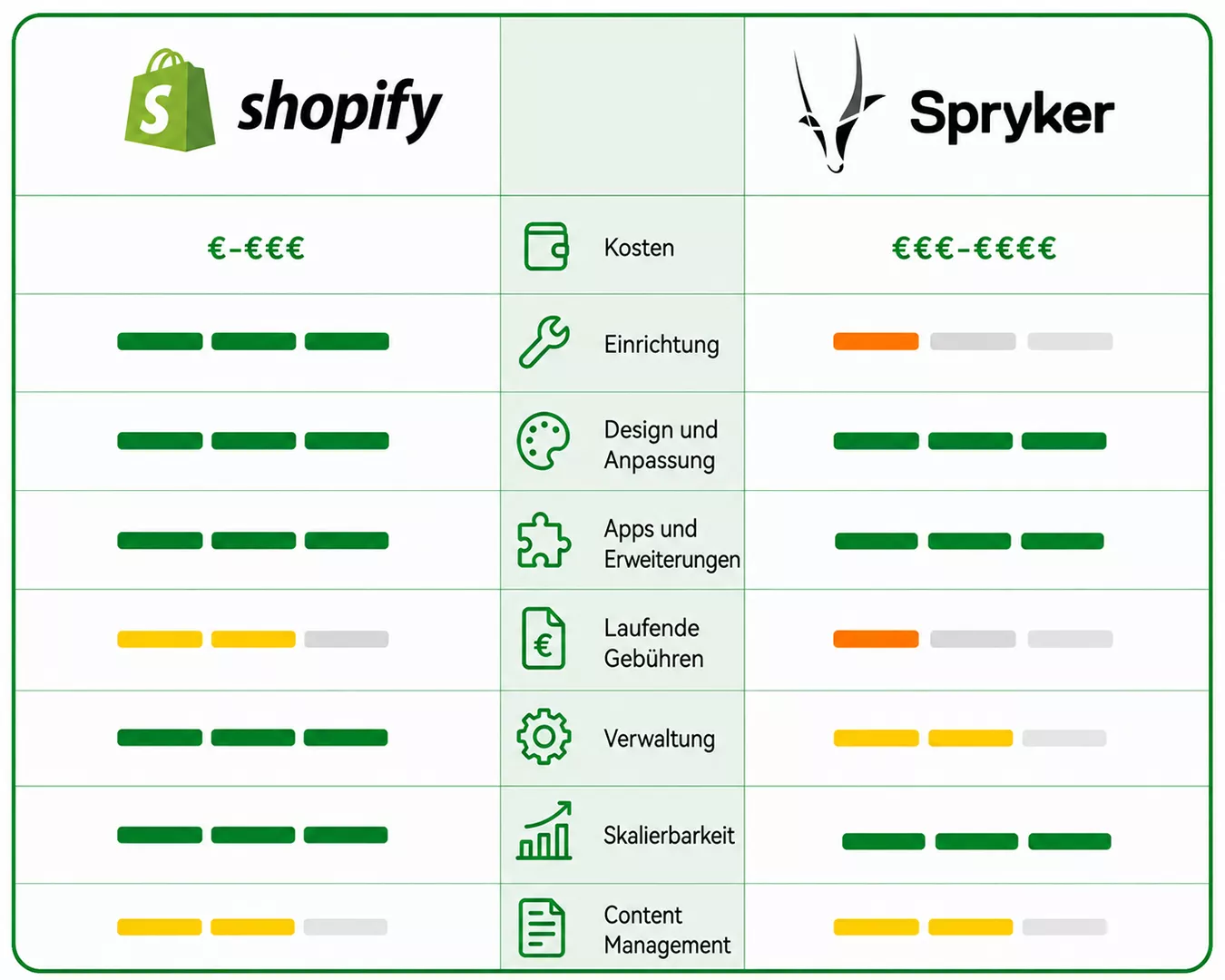
Spryker vs Shopify: Direct Comparison 2026
Spryker vs Shopify in direct comparison. Costs, complexity, composable commerce and time to market. Find out which platform fits you.