
VTEX Alternatives 2026: Enterprise Power with Predictable Costs
VTEX alternatives compared: enterprise power without revenue-based GMV fees or partner dependency. Which system suits which shop.

Richard Roth
SEO & GEO Strategist
October 4, 2026
10 min read
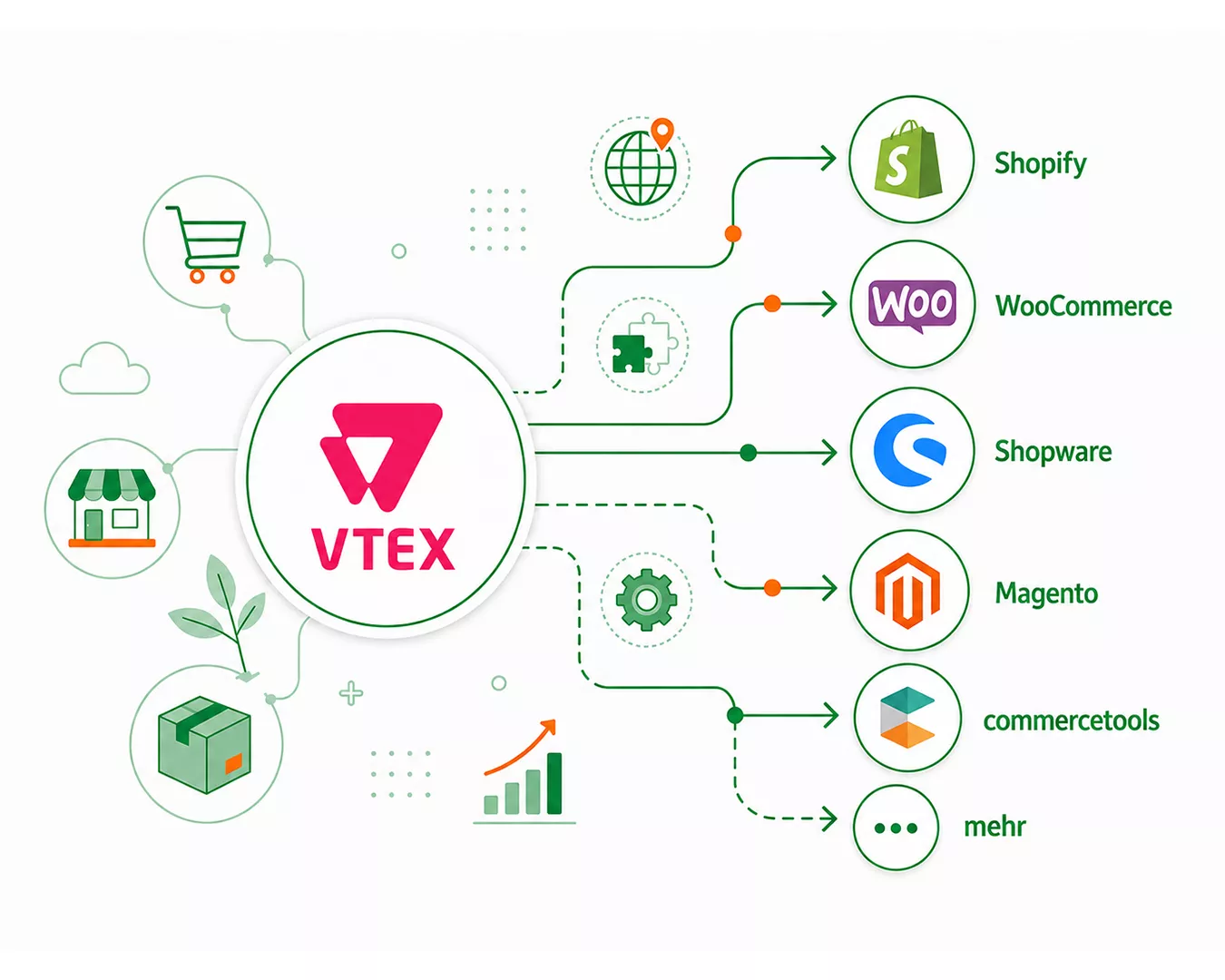
VTEX is a powerful enterprise SaaS for digital commerce, strong in B2B, marketplace operations, and international trade. But that capability comes at a price: a base fee plus revenue-based shares of GMV, noticeable complexity, and usually certified implementation partners. For many merchants, the question eventually comes up whether that effort is really necessary.
Let’s look at the best VTEX alternatives: what they can do, where their limits are, and which shop system really pays off for whom.
Why do merchants look for a VTEX alternative?
Because VTEX becomes oversized and too expensive for many shops. The most common triggers are the revenue-based costs, the platform’s complexity, and the slow time to market when even small changes have to run through certified partners. The typical reasons to look away from VTEX:
- Revenue-based costs: On top of the base fee you pay a share of GMV. As revenue grows, platform costs grow too, often faster than the benefit.
- Complexity: VTEX is powerful, but that’s exactly what makes it demanding. For many tasks you need a certified implementation partner.
- Slow time to market: Changes to the frontend or to processes drag on, because they usually run through development and partners.
- Partner dependency: Without an agency at your side, VTEX is hard to run on your own, which raises costs and response times.
The complexity has a measurable cost in the frontend: in our Core Web Vitals shop system study, just 5.6% of VTEX shops pass the mobile benchmark, against 81.8% of Shopify shops.
- • Shopify (Plus): The best alternative for most VTEX merchants. Enterprise performance, B2B, and internationalization without revenue-based platform costs and without a maintenance load.
- • Cost model: VTEX ties up a base fee plus shares of GMV. Shopify has predictable terms, which makes total costs far more calculable as revenue grows.
- • Adobe Commerce (Magento): The enterprise pick for very complex, highly custom B2B with your own dev team.
- • Marketplace and seller management: This is exactly where VTEX (or Spryker) is strong. If you build a true multi-seller marketplace, that's a legitimate reason to stay on VTEX.
- • VTEX strength: Highly complex, international marketplace trade remains a genuine VTEX domain. The question is whether your project really needs that depth.

The single question that decides a VTEX move is whether you actually run a multi-seller marketplace or a very good scalable B2B and D2C shop. On the migration side, the seller-management and marketplace logic is exactly what does not port cleanly to a standard platform, so that is where I draw the line. If your catalog and orders are complex but single-seller, the technical move is far more routine than the license fees make it feel.
What must a good VTEX alternative be able to do?
A good alternative has to cover VTEX’s strengths without dragging along the cost and complexity. We rate all systems on the same six axes, so the comparison stays fair and consistent.
- Total cost: What do you really pay, including operation, maintenance, and revenue-based shares?
- Scalability: Does the system carry high volumes, international stores, and B2B?
- Usability: Can you work in your team or do you need a partner for everything?
- Maintenance effort: Who handles updates, hosting, and security?
- Content and SEO: Do rankings, structure, and performance stay clean?
- Time to market: How fast do you implement changes and campaigns?
The best VTEX alternatives at a glance
| Platform | Type | From price/month | Hosting | Best for |
|---|---|---|---|---|
| Shopify (Plus) | SaaS (hosted) | from 36 € | included | Enterprise performance, B2B, and internationalization without a maintenance load |
| Shopware | Self-hosted / SaaS | CE free | your own | Self-hosted DACH B2B with full code control |
| Adobe Commerce (Magento) | Self-hosted / PaaS | high license/year | your own | Very large, custom enterprise B2B |
| BigCommerce | SaaS (hosted) | from ~35 € | included | A hosted platform with many native features |
| Spryker | Composable / Self-hosted | high license | your own | Highly custom marketplaces and composable commerce |
Shopify sits at the top because it delivers the best trade-off of performance, cost, and speed for most VTEX merchants. Shopware is strong if you want to stay self-hosted in DACH B2B. Adobe Commerce and Spryker are the heavyweights for very large, custom B2B and complex marketplaces respectively, and there VTEX sometimes beats Shopify too. BigCommerce is the hosted alternative with many native enterprise features.
The alternatives in detail
Shopify: enterprise performance without revenue-based costs
Shopify scales up to Shopify Plus and delivers exactly the performance most VTEX projects actually need, just without the maintenance load and without GMV-based platform costs.
- Make costs predictable. Instead of a base fee plus a share of revenue, you pay clear, calculable terms from 36 euros a month. As revenue grows, platform costs don’t explode.
- Shorten time to market. You implement campaigns, products, and changes in hours, much of it without developers and without a certified partner.
- Cover B2B and international. Shopify Plus brings B2B, multiple markets, currencies, and languages, without you having to operate a complex platform for it.
For most merchants sitting on VTEX today or evaluating it, that’s the more pragmatic path to comparable performance.
Do the honest test: do you really run a multi-seller marketplace, or is your business at its core a very good, scalable B2B and D2C shop? If the latter is true, VTEX with its revenue-based costs is usually oversized for you.
Shopware: self-hosted DACH B2B
Shopware is a strong German system for B2B mid-market that gives you full code control. If you want to stay self-hosted and have a dev team, it’s a serious option.
- Strengths: Full control over code and hosting, strong B2B, large DACH community.
- Weaknesses: Operation, updates, and hosting are on you, which ties up resources. Less turnkey than a SaaS.
- Best for: DACH B2B merchants who put control over maintenance freedom.
Adobe Commerce (Magento): the enterprise heavyweight
Adobe Commerce is the classic pick for very large, highly custom B2B with your own team. Shopify isn’t automatically the better choice here.
- Strengths: Maximum depth and customizability, strong B2B, huge ecosystem.
- Weaknesses: High license and operating costs, you need a dedicated dev team.
- Best for: Large enterprise merchants with very complex, custom requirements.
BigCommerce: hosted with many native features
BigCommerce is a hosted SaaS with many native enterprise features and an open API. A solid compromise between a standard platform and flexibility.
- Strengths: Many features out of the box, hosted, headless option.
- Weaknesses: Smaller app ecosystem than Shopify, less widespread.
- Best for: SaaS fans who want many native features without running the operation.
Spryker: for true marketplaces and composable commerce
Spryker is a composable enterprise platform for highly custom architectures and marketplaces. This is exactly where, in the complex multi-seller scenario, it plays to its strength (like VTEX).
- Strengths: Maximum flexibility, strong marketplace and seller management, composable.
- Weaknesses: Highest total cost from license, infrastructure, and a permanent dev team.
- Best for: Very large, custom marketplaces where standard platforms hit their limits.
VTEX vs. Shopify: the direct comparison
| Criterion | VTEX | Shopify (Plus) |
|---|---|---|
| Model | Enterprise SaaS, revenue-based | SaaS, fully hosted, predictable |
| Entry cost | base fee plus share of GMV | from 36 €/month, Plus for enterprise |
| Hosting and updates | included (SaaS) | included, automatic |
| Maintenance effort | high, partner usually needed | minimal |
| Time to market | longer, via partner | fast, often without developers |
| Marketplace / seller | very strong | possible via apps, less deep |
| Best for | complex international marketplaces | scaling B2B and D2C brands without a maintenance load |
More detail in the direct Shopify vs. VTEX comparison and the shop system comparison.
Which alternative is worth it for whom?
| Your profile / requirement | Recommendation |
|---|---|
| Enterprise performance, B2B, and international, but predictable costs | Shopify (Plus) |
| Self-hosted DACH B2B with full code control | Shopware |
| Very large, custom enterprise B2B with your own team | Adobe Commerce |
| Hosted SaaS with many native features | BigCommerce |
| True multi-seller marketplace, highly custom | Spryker or stay on VTEX |
For most merchants the road leads to Shopify, because you get the performance without carrying revenue-based platform costs and a maintenance load.
What does switching from VTEX cost?
It depends on your architecture, your interfaces, and the size of your catalog. There’s no fixed flat price, because hardly any VTEX setup is like the next.
The shop system calculator helps with the cost estimate, and as an agency specialized in Shopify migration we also handle demanding moves so that data, interfaces, and rankings carry over cleanly. How it works for VTEX is on our VTEX to Shopify migration page.
Conclusion: which VTEX alternative fits you?
For most merchants, Shopify is the best alternative to VTEX. You get enterprise performance including B2B and internationalization, without revenue-based platform costs and without certified partners for every change. If, on the other hand, you run a true, highly complex multi-seller marketplace, VTEX or Spryker stays sensible, and for very large, custom B2B, Adobe Commerce is the enterprise pick.
Not sure whether VTEX is really necessary for your project? We look at your setup and migrate at a fixed price, including interfaces and rankings. Get your free analysis.
 Frequently Asked Questions
What is the best VTEX alternative?
Why is VTEX so expensive?
Can Shopify replace my marketplace?
What does switching from VTEX to Shopify cost?
Is it worth switching from VTEX to Shopify?
You might also like
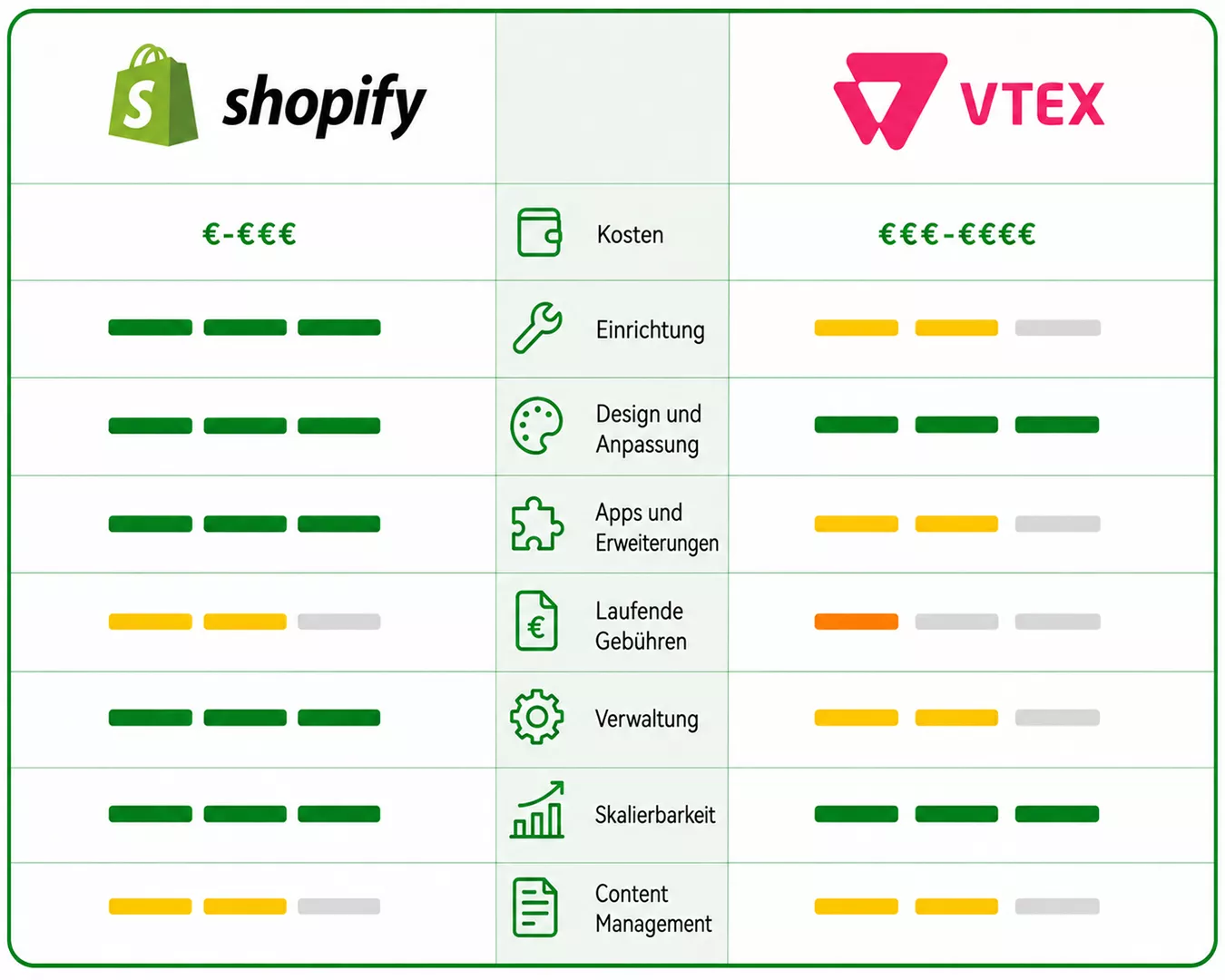
VTEX or Shopify? A Direct Comparison 2026
VTEX vs Shopify in a direct comparison: costs, B2B, marketplace, internationalization and SEO. Find out which system fits your store.
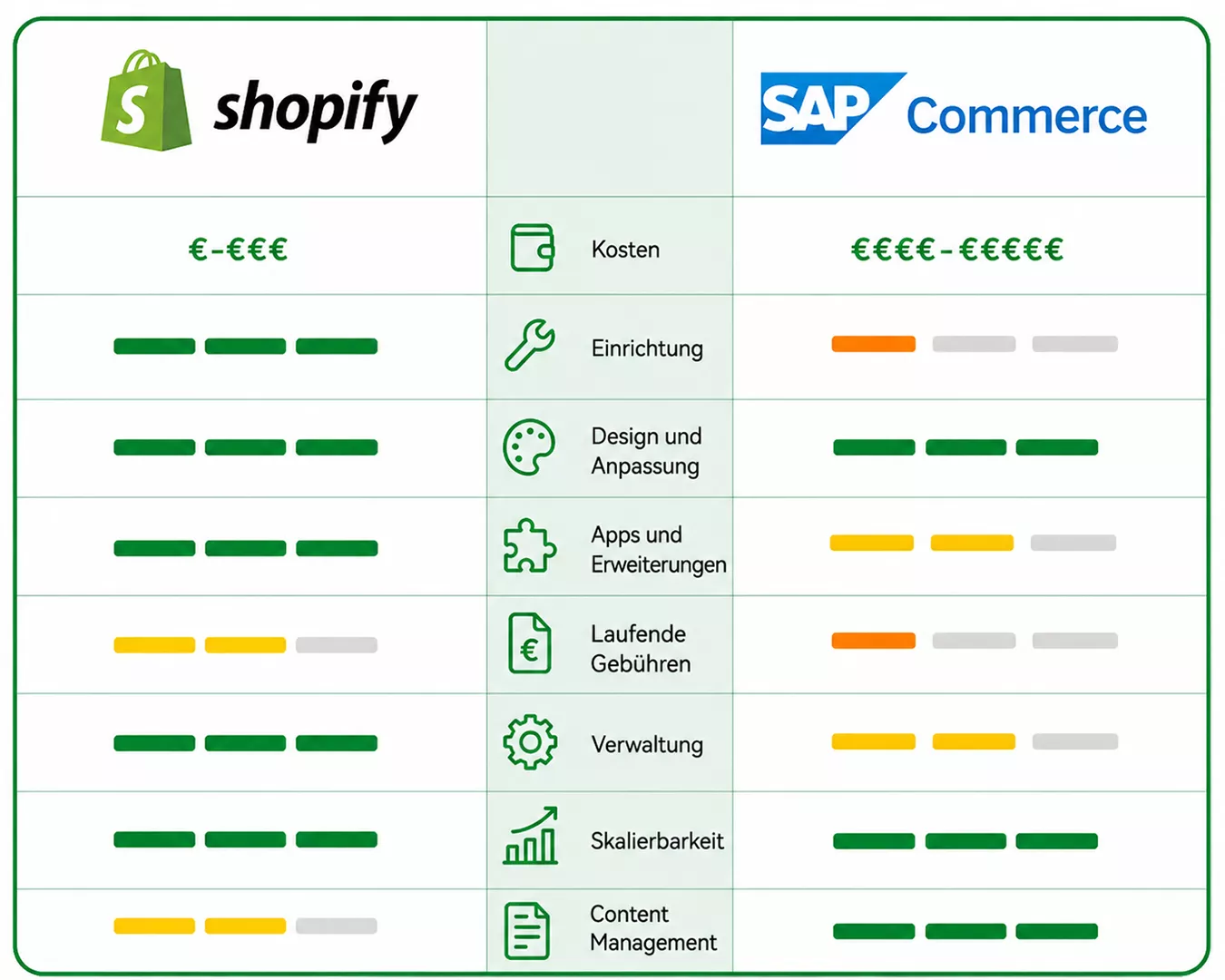
SAP Commerce or Shopify? A Direct Comparison 2026
SAP Commerce vs Shopify in a direct comparison: costs, B2B, SAP integration, complexity and SEO. Find out which system fits your store.
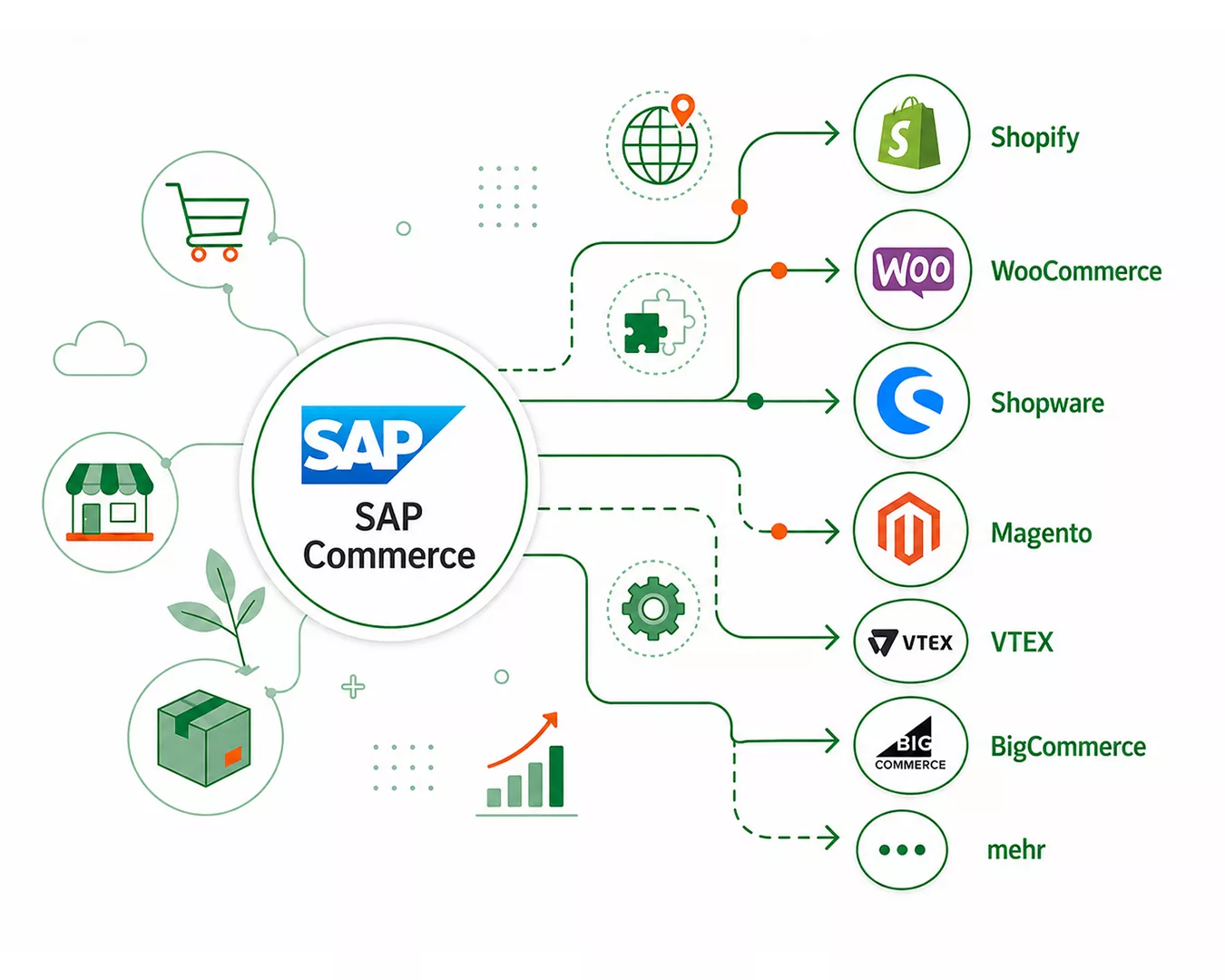
SAP Commerce Alternatives 2026: Enterprise Power, Leanly Operated
SAP Commerce alternatives compared: enterprise power without six-figure costs or months of time-to-market. The ERP stays connected via a connector.