Plentymarkets Alternatives 2026: Replace the Shop, the ERP or Both
Plentymarkets alternatives compared: ERP and multichannel tools like Xentral, Billbee and JTL-Wawi and shop systems like Shopify. With a clear recommendation.

Richard Roth
SEO & GEO Strategist
August 2, 2026
15 min read
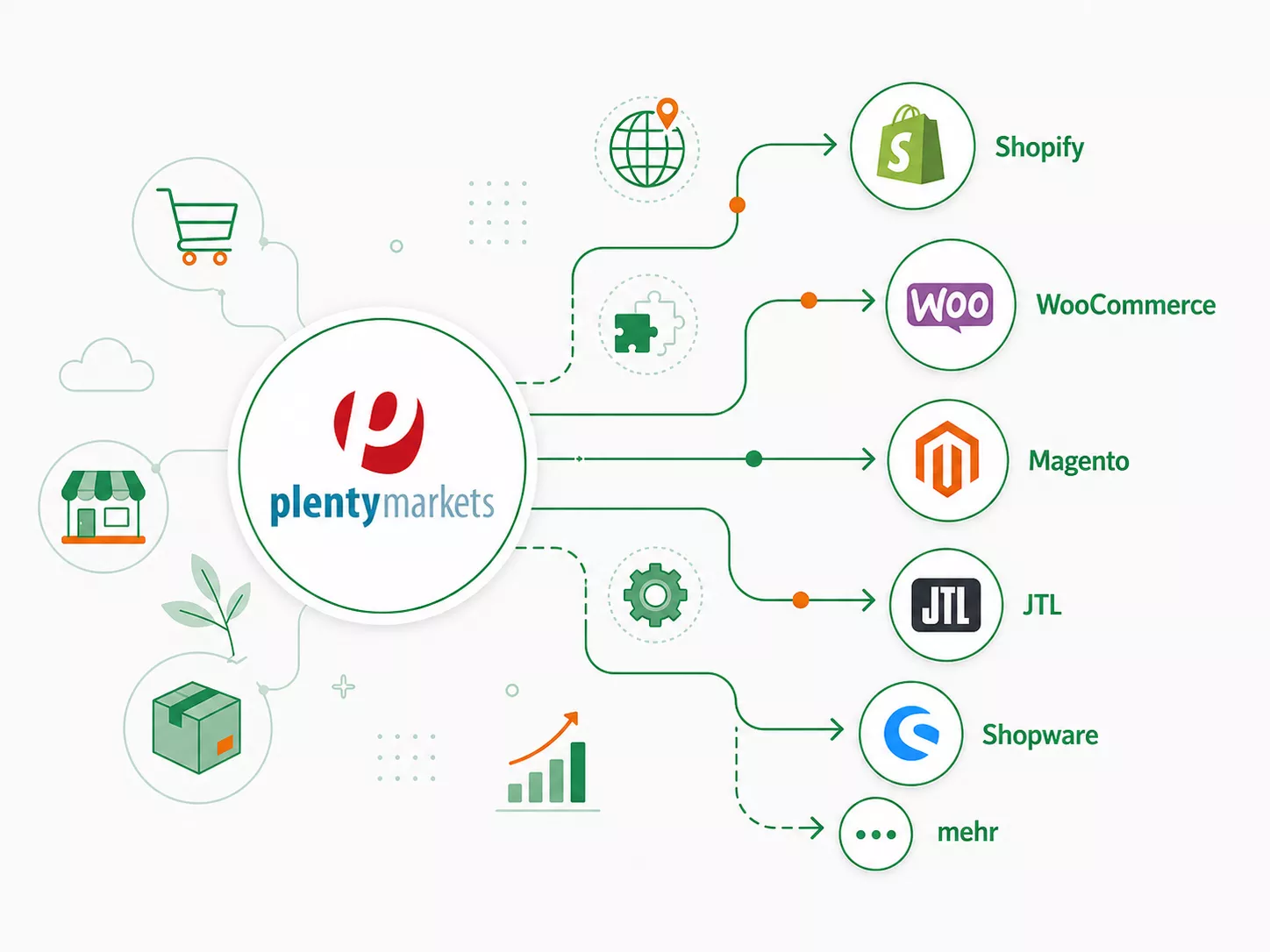
Plentymarkets can do almost everything: shop, inventory management and marketplaces, all in one system. But that is often exactly the problem. It is also why the question of an alternative is trickier than it sounds: Plentymarkets is not a pure shop system but an ERP and multichannel platform with a shop attached. A real alternative can therefore be a new shop system, a new inventory or multichannel tool, or a combination of both.
Let’s look at both sides: the ERP and multichannel alternatives like Xentral, Billbee and JTL-Wawi, and the shop-system alternatives like Shopify. What they can do, where their limits are and which path really pays off for whom.
- • Plentymarkets is two things in one: shop plus ERP/multichannel. First clarify whether you want to replace the shop, the inventory system, or both.
- • ERP and multichannel alternatives are Xentral, Billbee, JTL-Wawi and (internationally) Odoo. They handle inventory, marketplaces and fulfilment.
- • Shopify is the lean storefront alternative for most: hosted, fast, from 36 euros a month, marketplaces via apps.
- • The lean path (best-of-breed): Shopify as a fast storefront plus a specialised ERP like Xentral, Billbee or JTL-Wawi. All of them integrate natively with Shopify.
- • Plentymarkets' strength is its native inventory management and marketplace connection. The question is whether your business really needs that depth in a single system.
Why do merchants look for a Plentymarkets alternative?
Most don’t switch because Plentymarkets is bad, but because the all-in-one weight slows their business down. Plentymarkets (today plentyONE) bundles shop, ERP and multichannel into one system. That is powerful, but overkill for many operators.
Four reasons come up again and again in practice:
- High complexity: The learning curve is steep, and many changes require a Plenty partner instead of doing it yourself.
- Slow frontend: Performance is often the weak spot with Plentymarkets, and slow load times cost you conversion directly. In our analysis of Core Web Vitals by shop system, only 47.1% of Plentymarkets shops reach good scores, compared to 81.8% for Shopify.
- Costs from base plus GMV: On top of the base fee there is a revenue-based component, plus ongoing partner support.
- Dependency and breaking changes: Larger updates can break existing processes and tie up time and budget again.
The bottom line: you often pay for a feature set bundled into a single system that many shops don’t actually need that way.
Replacing Plentymarkets: shop, ERP or both?
Before you compare systems, make the real decision first. Because Plentymarkets is two things in one, there are three paths:
- Replace only the storefront: You want your shop to be faster and more modern, but your inventory management and marketplace control are fine. Then you look for a shop system (e.g. Shopify) and connect your existing or a new ERP.
- Replace only the ERP/multichannel backend: The shop is fine, but inventory, order and marketplace management should get leaner. Then you look for an ERP or multichannel tool like Xentral, Billbee or JTL-Wawi.
- Replace both (best-of-breed): You break up the all-in-one logic and combine a specialised storefront with a specialised ERP. For most, this is the most sustainable path, because each system does what it does best.
For a pure Plentymarkets operator who had everything in one system, it usually comes down to path 3: Shopify as the storefront plus a modern ERP that connects natively to Shopify.
How do you recognise a good Plentymarkets alternative?
Whichever path you take, judge every candidate against the same criteria:
- Total cost: Base fee, revenue-based costs, hosting and ongoing support combined.
- Scalability: Does the platform keep up with growth and traffic or order peaks?
- Usability: How much can you do yourself, without a partner or developer?
- Maintenance effort: Who handles updates, operations and breaking changes?
- Integrations: Does the system fit cleanly with your shop or your ERP and your marketplaces?
- Content, SEO and time-to-market (for storefronts): Is the system enough for your content, do rankings survive the move and how fast are you live?
Which ERP and multichannel alternatives to Plentymarkets are there?
If what bothers you is mainly the inventory, order and marketplace management, you replace the ERP core of Plentymarkets. These are the relevant candidates:
| System | Type | Focus | Shopify integration | Best for |
|---|---|---|---|---|
| Xentral | Cloud ERP | Inventory, fulfilment, pre-accounting | native connector | Growing D2C brands in the DACH region |
| Billbee | Cloud multichannel | Order, invoice and shipping handling | direct connection | Small to mid-sized multichannel merchants |
| JTL-Wawi | Inventory system (self-hosted) | Warehouse, marketplaces, shipping | official JTL connector | Merchants with an ERP focus in the German market |
| Odoo | Modular ERP | Full business software | native connector | International, many business areas in one |
Xentral: the cloud ERP for growing D2C brands
Xentral is a cloud-native ERP that connects orders, warehouse, fulfilment and pre-accounting and integrates via a native Shopify connector. Stock levels, delivery notes and tracking numbers flow automatically between the ERP and the shop. Xentral is also a partner in Shopify’s Local ERP programme, which speaks for a tight integration.
- Strength: Modern, hosted inventory management without your own IT team, strong for scaling D2C brands.
- Best for: Merchants who want out of the Plentymarkets complexity but need a real ERP.
Billbee: the lean multichannel tool
Billbee is a cloud-based multichannel software that consolidates orders from shops and marketplaces, creates invoices and delivery notes and sends status updates back. Via the Shopify interface and more than 150 further connections, you cover Amazon, eBay and newer channels too.
- Strength: Affordable entry, quick to get running, no high IT effort.
- Limit: Not a full ERP with accounting and production, more order and shipping handling.
- Best for: Small to mid-sized multichannel merchants who want to bring order to their order chaos.
JTL-Wawi: the ERP classic in the German market
JTL-Wawi is the widely used inventory management system for German online retail. The official JTL connector for Shopify synchronises articles, stock, prices and orders automatically. Handy: the Shopify connection is included in the free JTL Start edition, you only pay per transaction.
- Strength: Mature native inventory management with strong marketplace integration, large partner market.
- Limit: Self-hosted, the technical operation of the Wawi is on you.
- Best for: Merchants whose business hinges on inventory management and who want to be well served in the German market.
Odoo: the modular full ERP (international)
Odoo is a modular business software that goes far beyond inventory management (CRM, accounting, production and more) and connects to the shop via a Shopify connector.
- Strength: Very broad, usable internationally, many business areas in one system.
- Limit: Breadth brings complexity, and in DACH retail the community is smaller than for JTL or Xentral.
- Best for: Internationally growing merchants who want to bundle more than just e-commerce in one system.
Which shop-system alternatives to Plentymarkets are there?
If what bothers you is mainly the slow, unwieldy frontend, you replace the storefront. Serious selling platforms qualify as alternatives here, not website builders:
| Shop system | Type | From price/month | Hosting | Best for |
|---|---|---|---|---|
| Shopify | SaaS (hosted) | from 36 € | included | Focused, fast shops, marketplaces via apps |
| Shopware | Self-hosted | CE free | yourself | Self-hosted B2B in the DACH mid-market |
| BigCommerce | SaaS (hosted) | from ~35 € | included | SaaS fans with many native multichannel features |
| Adobe Commerce (Magento) | Self-hosted / PaaS | high licence/year | yourself | Very large, custom enterprise B2B with a dev team |
Shopify: the lean switch
Shopify is a SaaS platform: hosting, updates, security and scaling are included in the monthly price. Instead of a heavyweight all-in-one, you get a focused selling platform that does the one thing that matters well: selling. Where Plentymarkets is often slow, Shopify delivers speed and a global CDN out of the box. You keep serving Amazon and eBay via apps, just from a much leaner setup. The native ERP depth of Plentymarkets you cover via an ERP connector, more on that in a moment.
Shopware: self-hosted B2B in the DACH region
Shopware is a strong, API-first system, especially in the B2B mid-market. Highly customisable with full code control, but self-hosted with hosting costs and major upgrades as projects, so a similar operational effort to Plentymarkets.
BigCommerce: SaaS with multichannel depth
BigCommerce is hosted like Shopify but brings many features natively that require apps elsewhere. The app ecosystem is smaller than Shopify’s and adoption in the DACH region is lower.
Adobe Commerce (Magento): the enterprise heavyweight
Adobe Commerce is the classic choice for very large, highly customised shops with complex B2B. Maximum depth, but licence, infrastructure and an in-house dev team quickly tie up high five-figure amounts per year.
For me, the slow Plentymarkets frontend is not just a conversion issue but also a ranking one: load time and Core Web Vitals feed directly into Google’s evaluation, and this is exactly where Shopify wins noticeably with its CDN out of the box. When migrating, though, it is important to redirect the often long, generic Plentymarkets URLs cleanly to descriptive Shopify URLs. I set up this URL map in advance, otherwise the speed gain immediately costs you rankings again.
The lean path: Shopify plus a specialised ERP
For many Plentymarkets operators, the best alternative is not a single platform but a combination: a fast, focused storefront plus a specialised ERP. Instead of one system that does everything only half well, each system gets the job it does best.
The clever part: the relevant ERP and multichannel tools integrate natively with Shopify. Xentral, Billbee, JTL-Wawi and Odoo all have ready-made Shopify connectors. So you can move from Plentymarkets to Shopify and still keep or newly set up strong inventory management including marketplace control.
Concretely, that means:
- Shopify handles the frontend, checkout, content and speed.
- Xentral, Billbee, JTL-Wawi or Odoo handles inventory, orders, marketplaces and fulfilment.
- The connector keeps stock, prices, orders and tracking in sync automatically.
This way you break up the all-in-one weight of Plentymarkets without losing selling power or process depth.
Before you switch, a sober cost comparison pays off. In our shop system calculator, you can see in a few minutes what Plentymarkets costs you in total operation and where a leaner storefront saves.
Does plentyONE change the alternative question?
No. Plentymarkets now operates as plentyONE, but the reasons for switching lie in the operating model, not the name. As plentyONE it remains a heavyweight all-in-one platform with an ERP core, revenue-based costs and a steep learning curve.
That is exactly why the term plentyONE alternatives triggers the same candidates: on the storefront side Shopify, Shopware, BigCommerce and Adobe Commerce, on the ERP side Xentral, Billbee, JTL-Wawi and Odoo. The new name changes nothing about this selection.
Plentymarkets vs Shopify: the direct comparison
For the storefront question, this is the decisive comparison. Here is the short version:
| Criterion | Plentymarkets | Shopify |
|---|---|---|
| Model | SaaS all-in-one (shop, ERP, multichannel) | SaaS, focused selling platform |
| Entry cost | from ~200 €/month base plus GMV fees | from 36 €/month, all included |
| Hosting and updates | managed, but breaking changes | included, automatic |
| Maintenance effort | medium to high | minimal |
| Usability | steep learning curve, very complex | tidy, no deep technical know-how needed |
| Frontend performance | often a weak spot | speed and CDN out of the box |
| Inventory and marketplaces | native core | via ERP connector and apps |
| Best for | ERP- and marketplace-heavy multichannel merchants | focused, scaling brands |
You will find the detailed head-to-head with all the details on costs, ERP and performance in our article Shopify or Plentymarkets in direct comparison. For an overview of all common systems, see the shop system comparison.
Which alternative pays off for whom?
The right choice depends on your profile, not on a blanket winner.
| Your profile / requirement | Recommendation |
|---|---|
| Focused shop, speed and easy operation | Shopify (plus ERP connector if needed) |
| Inventory management should get leaner and cloud-based | Xentral or Billbee |
| ERP focus in the German market, marketplaces centralised | JTL-Wawi |
| International, many business areas in one system | Odoo |
| Very large, custom enterprise B2B | Adobe Commerce |
| Self-hosted control in DACH B2B | Shopware |
| Replace both without losing process depth | Shopify plus Xentral, Billbee or JTL-Wawi |
For the largest share of focused shops, the path leads to Shopify as the storefront, combined with a suitable ERP, because the balance of speed, usability and cost fits best.
What does switching from Plentymarkets cost?
It depends on the size of your shop, the number of products, your marketplace connections and the complexity of your processes. So there is no fixed flat price.
Two things help you get a sense of it. First, the shop system calculator, which shows you what your current system costs you in total operation. Second, our experience as an agency specialised in Shopify migration from over 45 moves: a clean switch is predictable when data, redirects, rankings and the ERP connection are considered from the start. How this works specifically for Plentymarkets, you can read on our page about Plentymarkets to Shopify migration.
Before switching, clarify which processes really have to stay in the ERP. Often it is enough to connect the inventory system via a connector instead of rebuilding the entire all-in-one logic.
Conclusion: which Plentymarkets alternative fits you?
Plentymarkets is powerful, but it bundles shop and ERP so tightly that both become unwieldy together. The best alternative is therefore rarely a single system, but the right combination: a fast storefront like Shopify plus a specialised ERP like Xentral, Billbee or JTL-Wawi, all of which connect natively to Shopify.
If you only want to modernise inventory management, Xentral, Billbee, JTL-Wawi or Odoo are the right candidates. If you only want to speed up the frontend, Shopify is the leaner path for most, while Shopware and Adobe Commerce play to their strengths in self-hosted control and very large enterprise B2B.
Not sure which combination fits your shop? We migrate your Plentymarkets shop at a fixed price and make sure data, rankings and the ERP connection survive the move. Get your free analysis.
 Frequently Asked Questions
 What is the best Plentymarkets alternative?
What are the best Plentymarkets alternatives for inventory management?
Can I connect Billbee, Xentral or JTL-Wawi with Shopify?
What are plentyONE alternatives?
Is Shopify better than Plentymarkets?
What does moving from Plentymarkets to Shopify cost?
You might also like
JTL Alternatives 2026: Switch the Shop, Keep Wawi and WMS
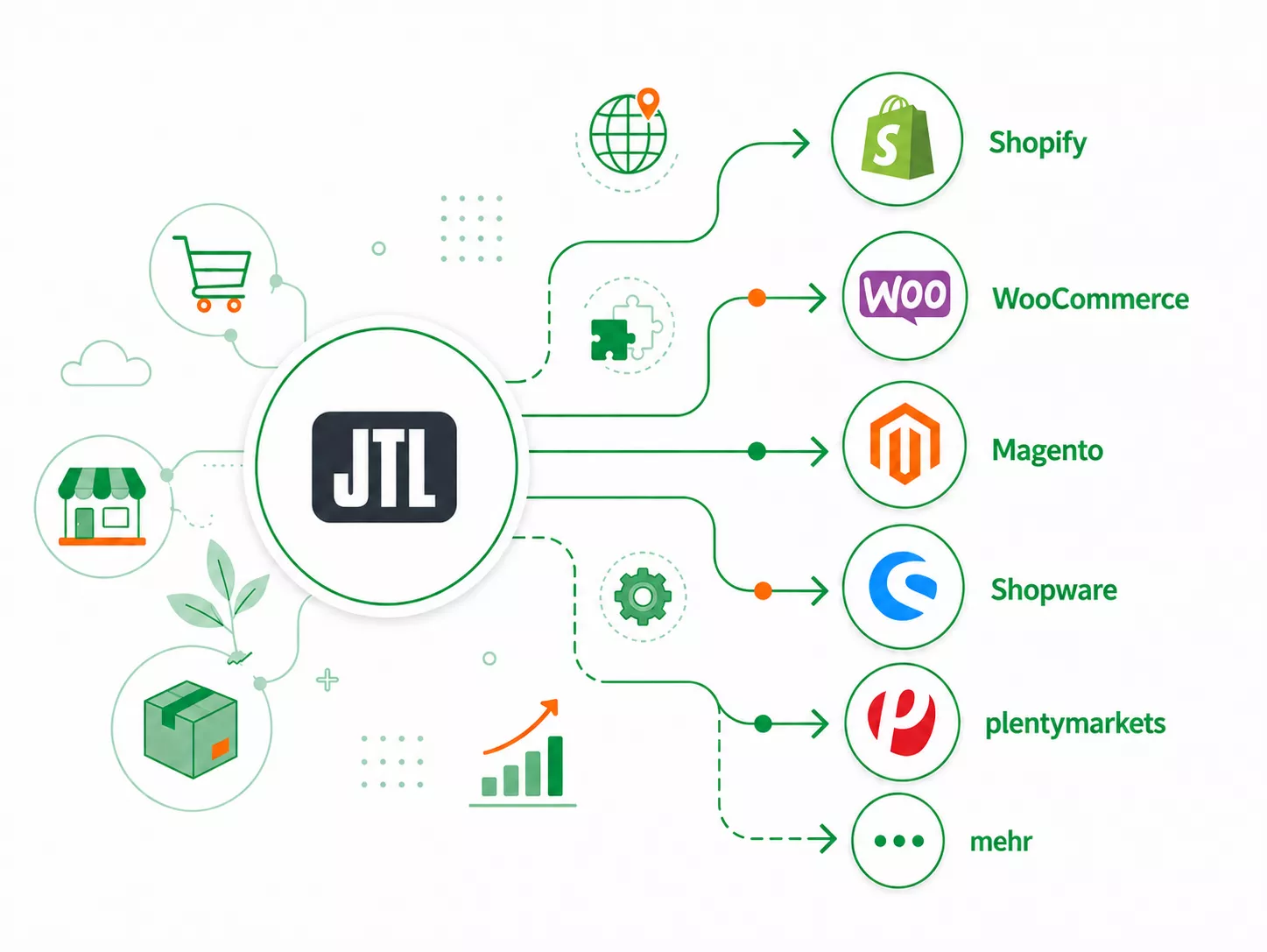
JTL alternatives compared: replace the JTL shop with Shopify and keep JTL-Wawi and WMS via a connector, or replace the backend entirely.
Plentymarkets vs Shopify: Direct Comparison 2026
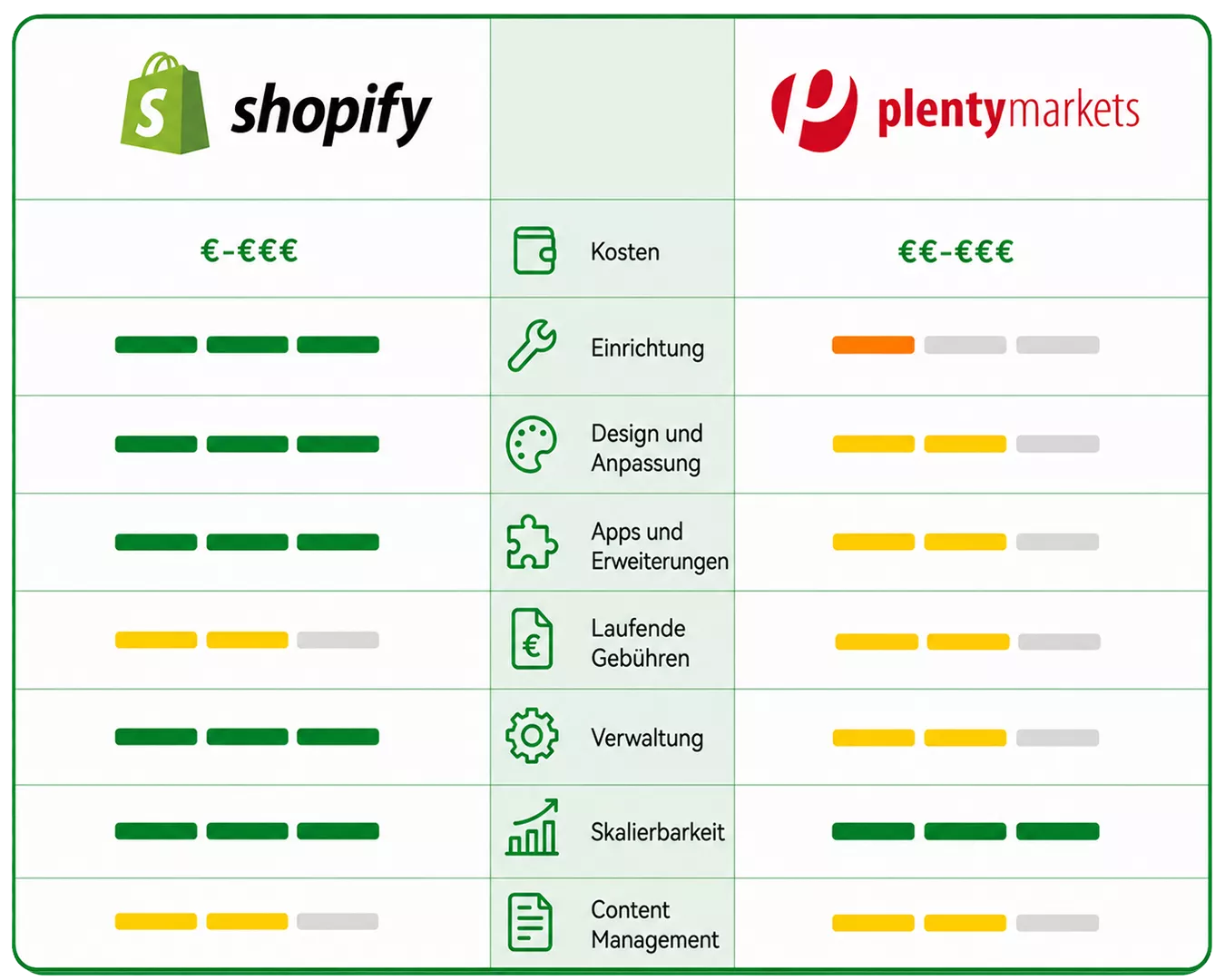
Plentymarkets vs Shopify in direct comparison. Costs, complexity, multichannel and ERP. Find out which system fits your store.
Contao Alternatives 2026: The Best Shop Systems Compared
Contao alternatives compared: full commerce depth instead of an Isotope add-on, a strong checkout and no server maintenance. Which system suits which shop.