
Gambio Alternatives 2026: The Shop Systems Actually Worth It
Gambio alternatives compared: no server maintenance, update stress or performance drag as you grow. Which system suits which shop.

Richard Roth
SEO & GEO Strategist
September 16, 2026
9 min read
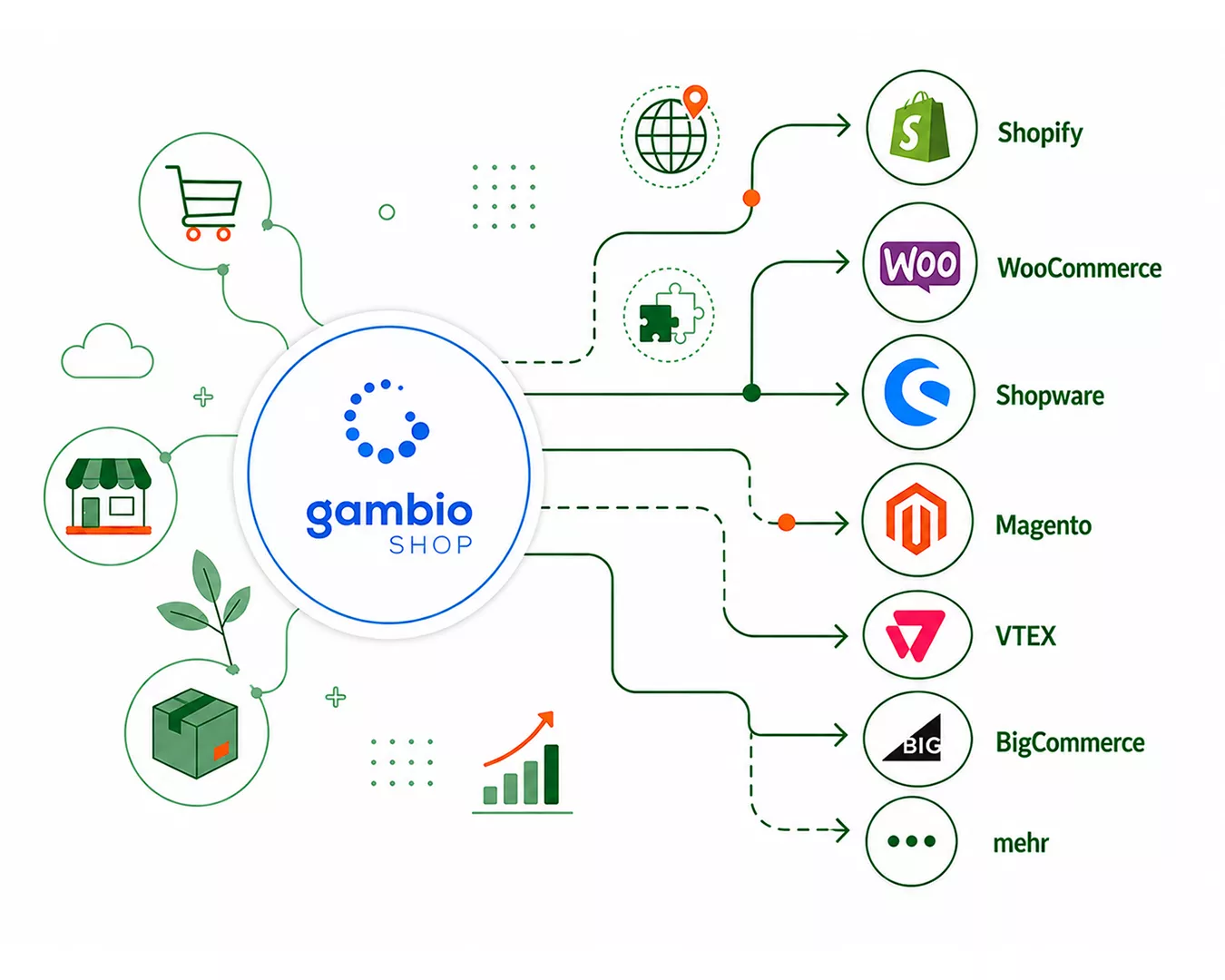
Gambio is well established in the German mid-market and covers a lot of what an SMB shop needs. The catch shows up in daily life: server and update maintenance, costly version upgrades and a shop that quickly hits its limits as traffic and product counts grow. That’s where many merchants start thinking about an alternative.
Let’s look at the best Gambio alternatives: what they can do, where their limits are and which system really pays off for whom.
- • Shopify takes hosting, updates and maintenance off your plate entirely and delivers speed, stability and modern UX without you touching a server.
- • No more version-upgrade stress: with Shopify, updates run automatically, and expensive major upgrades like Gambio's disappear.
- • Shopware and WooCommerce are the obvious alternatives if you deliberately want to stay self-hosted and flexible in the DACH region.
- • JTL pays off if your focus is inventory management and multichannel, OXID only for very large, complex B2B.
- • Gambio's strength stays the German backend with ready-made legal texts and tax logic. The question is whether that's worth the ongoing maintenance effort to you.
Why do Gambio merchants look for an alternative?
Rarely because of a single missing feature. It’s the operation and the speed. Gambio is a PHP system that you run either self-hosted or in the Gambio Cloud. In both cases, ongoing upkeep costs time: servers, security and above all the version upgrades, which often turn into small projects.
On top of that comes the module ecosystem, which is limited, and a UX that feels less contemporary compared to modern systems. For a shop that’s meant to grow, those are real brakes. And you’re not alone in reconsidering: our shop system market share study records a 24.0% drop in Gambio’s share between 2024 and 2026.
The Gambio merchants I speak to almost always fear one thing about leaving: losing the German legal texts and tax logic baked into the backend. That worry is real but overstated, since terms, returns, privacy and tax classes all map cleanly onto Shopify via legal-text apps and the tax settings. What I’d genuinely miss on Gambio is the compounding drag of version upgrades and hosting, and handing that off is usually the change that frees up the time you were quietly losing every month.
What does a good Gambio alternative have to do?
The core is simple: less maintenance effort and more speed, without losing German legal and tax compliance. That’s why we compare the alternatives along six axes:
- Total costs: What do you really pay, including hosting, updates and maintenance?
- Scalability: Does the system grow with your catalog and traffic?
- Usability: Can you handle day-to-day work without a developer?
- Maintenance effort: How much time do servers, security and upgrades eat up?
- Content and SEO: How well can you maintain content and hold rankings?
- Time-to-market: How fast are you live and able to change things?
The best Gambio alternatives at a glance
| Platform | Type | From price/month | Hosting | Best for |
|---|---|---|---|---|
| Shopify | SaaS (hosted) | from 36 € | included | SMB merchants who want to lose maintenance and grow without server stress |
| Shopware | Self-hosted / Cloud | CE free | your own / Cloud | Self-hosted DACH merchants wanting more flexibility |
| WooCommerce | Self-hosted (WordPress) | from hosting cost | your own | Content-driven shops already on WordPress |
| JTL | Self-hosted + ERP | from cheap | your own | Merchants focused on inventory management and multichannel |
| OXID eShop | Self-hosted | CE free | your own | Larger, complex DACH B2B with an in-house team |
The alternatives in detail
Shopify: hand off maintenance, finally gain speed
Shopify is fully hosted, updates and security run automatically. For Gambio merchants that solves several problems at once: the maintenance effort, the expensive version upgrades and the fluctuating performance.
- No hosting and no upgrade projects. Gambio upgrades and server operations cost time, Shopify updates itself in the background.
- Stable performance and modern UX. Via its global CDN infrastructure, your shop stays fast no matter how the catalog grows. Current themes bring a contemporary look without a developer.
- Huge app ecosystem. Where Gambio has a small module offering, Shopify has a matching app for almost every requirement.
For most Gambio shops that’s a clear win in speed and predictability. And yes, German legal and tax compliance can be mapped cleanly, more on that shortly.
Before switching, list your Gambio legal texts and tax settings: terms, returns policy, privacy, shipping rules, tax classes. That quickly shows what you carry over to Shopify via legal-text apps and the tax settings directly.
Shopware: the self-hosted peer alternative
If you’d rather stay self-hosted, Shopware is the more modern step in the DACH region.
- Strength: modern, API-first, highly customizable, strong B2B and content features.
- Weakness: self-hosted like Gambio, you trade one maintenance effort for the next and often need a developer for customizations.
- For whom: merchants who want self-hosted control but a more modern, more broadly supported system.
WooCommerce: strong when content comes first
WooCommerce is a plugin for WordPress and therefore the first choice if your shop is strongly content-driven.
- Strength: full control, a huge plugin ecosystem, excellent for content and SEO.
- Weakness: you’re self-hosted again, handling updates, security and the interplay of many plugins.
- For whom: shops already on WordPress or wanting to closely link blog and shop.
JTL: when inventory management is the core
JTL comes from inventory management and is strong in DACH commerce when warehousing, shipping and multichannel are central.
- Strength: a powerful, free ERP, good connection to marketplaces and fulfillment.
- Weakness: the shop itself is self-hosted and maintenance-heavy, and getting into the whole system takes time.
- For whom: merchants with many orders and channels for whom the ERP is the centerpiece.
OXID eShop: only for large, complex B2B
OXID is a self-hosted system with a strong B2B focus. For most Gambio merchants it’s a size too big, but named plainly, it belongs here.
- Strength: deep, native B2B with customer groups and tiered prices, high customization.
- Weakness: high operating effort and dependency on scarce OXID specialists.
- For whom: larger merchants with complex B2B and their own dev team. Shopify isn’t automatically the better choice here.
Gambio vs. Shopify: the direct comparison
| Criterion | Gambio | Shopify |
|---|---|---|
| Model | Self-hosted or Gambio Cloud | SaaS, fully hosted |
| Entry cost | from cheap, Cloud as subscription | from 36 €/month, all included |
| Hosting and updates | your own or Cloud, upgrades as projects | included, automatic |
| Maintenance | high | minimal |
| Performance | depends on hosting | fast via global CDN |
| German legal texts | native in the backend | via apps and settings |
| Best for | established DACH SMBs willing to maintain | growing shops without a maintenance load |
Read the detailed comparison in Gambio vs. Shopify.
Which alternative fits whom?
| Your profile / requirement | Recommendation |
|---|---|
| Lose maintenance, grow fast and without server stress | Shopify |
| Deliberately stay self-hosted and maximally flexible | Shopware or WooCommerce |
| Strong content and WordPress focus | WooCommerce or Shopify |
| Inventory management and multichannel at the center | JTL |
| Very large, complex DACH B2B with an in-house team | OXID |
For most Gambio shops the road leads to Shopify, because maintenance, upgrades and performance worries fall away without German compliance suffering.
What does switching from Gambio cost?
It depends on your catalog, the number of products and your customizations. So there’s no fixed flat price.
The shop system calculator shows what Gambio costs you across the whole operation once you honestly factor in hosting, updates and maintenance. And as an agency specialized in Shopify migration with over 45 moves, we know what matters in a Gambio move: from product data to rankings. How it works for Gambio is on our Gambio to Shopify migration page.
Conclusion: which Gambio alternative fits you?
For most Gambio shops, Shopify is the best alternative. You hand off hosting, updates and the maintenance effort and get speed, stable performance and a modern UX in return. You map your legal texts and tax logic cleanly via apps and settings.
If you deliberately want to stay self-hosted and flexible, Shopware or WooCommerce are the more modern successors. If your focus is inventory management, JTL is strong. And only for very large, complex B2B is OXID worth a look.
Not sure whether the switch pays off? We migrate your Gambio shop at a fixed price, carry over your legal and tax logic cleanly and make sure data and rankings survive the move. Get your free analysis.
 Frequently Asked Questions
What is the best Gambio alternative?
Do I lose my German legal texts when switching to Shopify?
Is Shopify better than Gambio?
What does switching from Gambio to Shopify cost?
For whom is WooCommerce or JTL worth it instead of Shopify?
You might also like
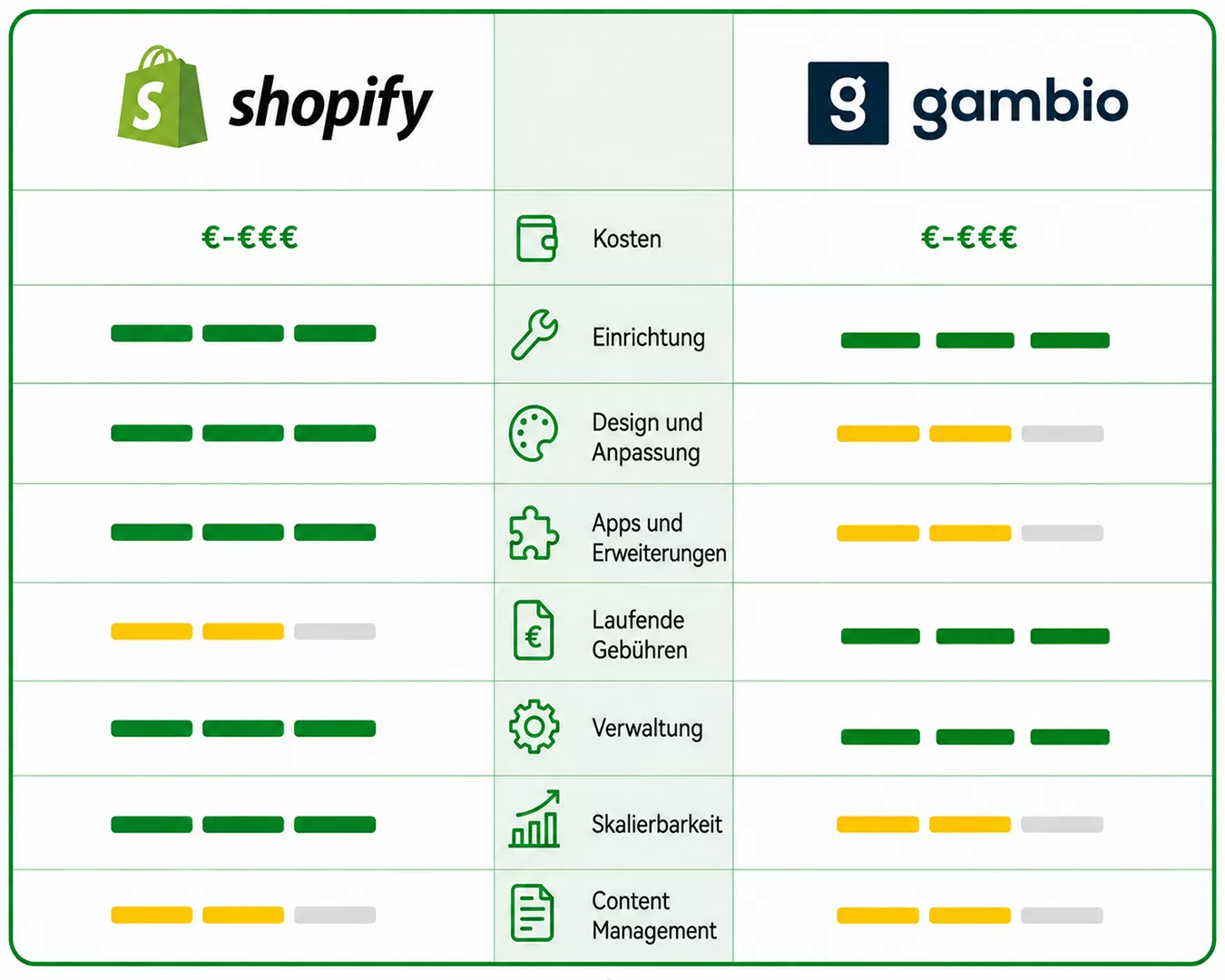
Gambio or Shopify? A Direct Comparison 2026
Gambio vs Shopify in a direct comparison: costs, maintenance, performance, features and SEO. Find out which system fits your store.
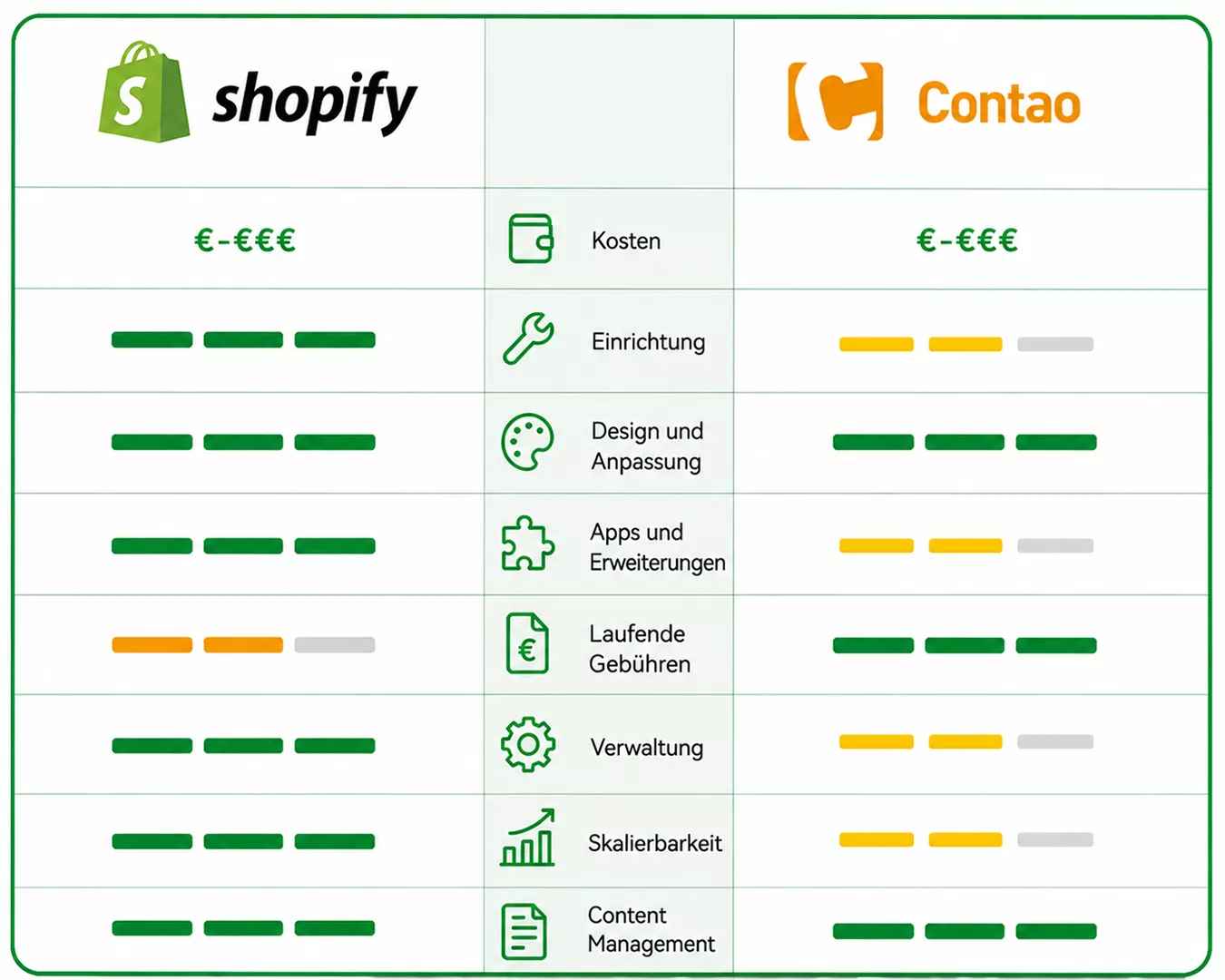
Contao or Shopify? A Direct Comparison 2026
Contao vs Shopify in a direct comparison: commerce features, content, maintenance, costs and SEO. Find out which system fits your store.
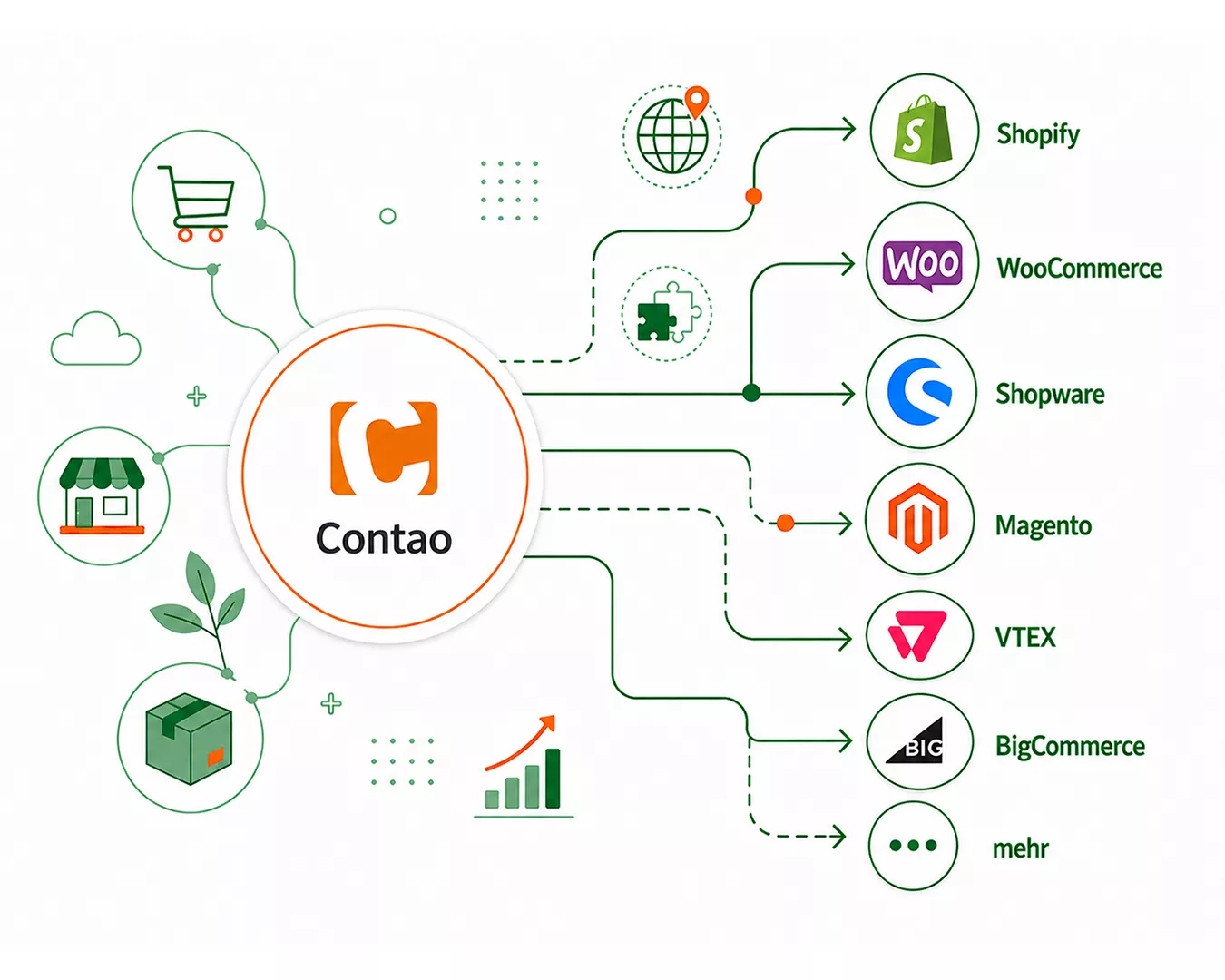
Contao Alternatives 2026: The Best Shop Systems Compared
Contao alternatives compared: full commerce depth instead of an Isotope add-on, a strong checkout and no server maintenance. Which system suits which shop.